Judith Butler Breen, Margaret Soenser, Warren J. Blumenfeld et. al. “There Is a Person Here" - An Interview with Judith Butler.” in: International Journal of Sexuality and Gender Studies. Vol. 6, No. 1/2, 2001. (English)
In this interview, the coeditors, along with other contributors, ask Judith Butler a variety of questions regarding queer theory, gender identities, scientific and legal discourse, bodily abjection, race and class positioning, and political organizing. This range of subject matter suggests not only the breadth of Butler’s work, but also its applicability to any number of people, whose relation to theory ranges from highly politicized to politically indifferent. The interview demonstrates the responsiveness of Butler’s work to cultural translation and political action.
KEY WORDS:
Judith Butler; interview; gender; queer theory. In designing this interview, we wanted to raise questions that foregrounded our own commitment to a queer praxis sustained by a number of cultural registers, including academic scholarship, political activism, and personal relationship. We are very aware of writing at a time that begs the question: If one does not look queer or act queer, is one really queer. It is a time when same-sex marriage, military service, and scout participation garner media attention, but do so at the expense of issues and groups whose sexual practices, gender expressions, and political assumptions do not readily accord with those of a cultural mainstream. Current popular discussions of queerness are, in other words, not so very queer at all. Assimilation is in; queerness is out. As queer theorist Michael Warner (1999) has observed, “Increasingly to have dignity gay people must be seen as normal” (p. 52).
Given this current political mainstreaming of queerness, we wanted our interview to focus on the radical political potential that informs Judith Butler’s work. We contacted Judith Butler and asked her if she would be interested in participating in an interview for the special double issue of the
International Journal of Sexuality and Gender Studies, and she agreed to answer our questions through an email format. We then reached a number of individuals who had expressed interest in contributing essays for the issue as well as others we were aware of who had an interest and background in Butler’s work, and we asked if they would like to craft questions for the interview.
After we received all of their questions, we sorted them into topic areas and transmitted them to Judith Butler for her response. Implicitly throughout the interview, we have asked Butler to discuss her work in relation to “lived experience,” which our questioners have defined in various ways, including in terms of theory (questions 1 and 3); gender identities (questions 6 and 12); scientific and legal discourses (questions 3, 4, 5,
5 and 9); bodily abjection (questions 5 and 8); race and class positioning (questions 2 and 8); and political organizing (questions 10 and 11). Admittedly, “experience” is not a term that one typically immediately associates with queer theory or specifically with Butler. By invoking it, we recognize an experiential ground to Butler’s work and suggest the applicability of that work to any number of people, whose relation to theory ranges from highly politicized to politically indifferent; and from enthusiastic to skeptical. We also seek to argue against an understanding of feminism that does not include destabilized gender categories.
So, the interview begins with a question regarding ideological exchange: Is it possible for lesbian and gay critics and writers who draw on experiencebased models of gender to find connection with queer theory? We have also been motivated by an awareness of the critique at times levied against Butler, whereby her rigorous prose style is viewed as implicated in normative academic practices that professionalize queerness and so further marginalize nonacademic sexual and gender minorities. The final interview question (question 12) addresses this double concern with accessibility and political praxis. While we readily admit that Butler’s writing style is demanding, we wish to demonstrate, most immediately with this interview and more generally with the essay collection as a whole, her work’s responsiveness to cultural translation and to political action. It is our hope that this interview with Judith Butler will encourage conversation regarding the inclusiveness and relevance of her work for a wide-ranging audience. The list of participants (in order of their questions) includes Margaret Soenser Breen (University of Connecticut; Associate Editor,
International Journal of Sexuality and Gender Studies); Warren J. Blumenfeld (University of Massachusetts, Amherst; Editor,
International Journal of Sexuality and Gender Studies); Vicki
5. After responding to question 3, posed by Vicki Kirby, Judith Butler suggested that Kirby might wish to ask a follow-up question, which she did. 5 is the additional question, which we subsequently inserted into the original order of interview questions.
Page 9
Kirby (University of New South Wales, Sydney, Australia); Lynda Hall (University of Calgary, Canada); Natalie Wilson (Birbeck College, University of London); Susanna Baer (Humboldt University, Berlin, Germany); Robert Alan Brookey (Arizona State University, Tempe, Arizona); Diane Helene Miller (University of Georgia, Athens, Georgia); and Robert Shail (University of Exeter, United Kingdom).
Margaret Soenser Breen and Warren J. Blumenfeld
1. Margaret Soenser Breen: One might say that there are sharp divisions between queer critics or between writers of earlier times and those of the present. Yet, one might also speak of intergenerational indebtedness. Could you comment on the value of reading your work along side that of earlier, “essentialist” or “experiential” discussions of gender and sexuality?
Judith Butler: It is difficult for me to know whether, in relation to your question, I exist in the present or the past, since I think of myself now, ten years after
Gender Trouble, as already part of the earlier generation of queer writing. I do recognize, though, in what you say a tension between writers associated with gay and lesbian history, for instance, for whom the lives of gay people form the focus of analysis and certain strains within queer theory, where conceptual and textual analysis are more prominent. I’m not sure I would call the former “the past,” however, since there are now historians doing such work and writers who write of their own lives, or the lives of others, such as Kate Bornstein or Leslie Feinberg or Dorothy Allison who are, in fiction and prose, having a profound transformative effects on the cultures of gender. I am certainly not opposed to such writing, nor do I understand what I do to have surpassed that writing in some way that might be tracked generationally. My sense is that theory is certainly borne of lives and passions in various ways, but it offers a refracted view on its origins, and its origins are perhaps not as salient as its effects. It would be an impoverished world if all we had were queer theory without biography or autobiography. Samuel Delaney represents, I believe, a form of experience-based narrative that is at once pervasively theoretical. So your question catches me off guard.
As for essentialism, I think that there have been strong arguments in favor of its reemergence in feminism, which Naomi Schor, Rosi Braidotti, and Diana Fuss have made perhaps most eloquently. I gather that what is interesting there is the way that claims to essentialism can be separated from claims of biological determinism. Since those feminists, at least, have no desire to return to the biology is destiny argument. But even if they seek to protect their views against an assimilation to that disdained argument, I am not sure that they can keep their view from acquiring the same kind of function in political discourse.
The notion that sexual difference is fundamental to culture, for instance, which became something like a structuralist truth that survives in Lacanian discourse today, has a way of making sure we consider as unintelligible forms of sexual differentiation that do not conform to the “sexual difference” at hand. Thus, I wonder whether we can even begin to think transgender and intersex within such a restrictive framework. The point is not to argue that there are more than two sexes, but that we do not know what cultural variations differences may take. There are not only important overlaps between the sexes, but people don’t always stay with the sex to which they have been assigned. Moreover, if we take sexual difference to be a foundation of culture, we cannot ask how the assignment of sex—which is such a volatile political issue—takes place as a cultural practice. My view is that it is crucial to understand sex as assigned rather than assumed, and to recognize that there are a variety of ways through which “assignment” works culturally, and that these are systematically obscured by the presumption that sexual difference is a condition of every and all culture.
I understand that the main way that essentialism has emerged within the gay and queer movements recently is through the gay gene debate. I’ve learned a lot from Ed Stein on this matter. I think that the assertion of such ostensibly “hardwired” differences almost always takes place through metaphors, which belie a misunderstanding about what kinds of genes there are—and can be—and how genes function non-causally in relation to behavior. I’m much more interested in why people find it necessary to find the cause of their desire in their machinery. It is another moment in which cultural variability—and its anxieties—are eclipsed in favor of a false universality.
I have seen how arguments in favor of gay essentialism, however, are used politically for gay rights advocacy. Since if you can say that you cannot help your condition, then homosexuality becomes ostensibly more like race and sex, and its chances are increased for gaining protection under the precedents currently forming anti-discrimination law. But I would be skeptical of a cynical use of essentialism for advancing rights, if only because the very essentialism can be used against lesbian, gay, bi-, and trans people when it turns out that they do not conform to the definitions of their identity that the law, under other circumstances, came to accept.
2.
Margaret Soenser Breen and
Warren J. Blumenfeld: One might say that the pre-Stonewall era “butch” came out of a working-class context, a context that does not necessarily direct the performance of butch identity today. We are interested in how issues of class may be understood in terms of your discussion of performativity.
Judith Butler: This is a good question. There is surely a class background to the emergence of butch identity, as we’ve seen from recent studies, but I would be a bit hesitant to say that it emerges exclusively from working-class backgrounds. I think we would have to think carefully about butch identities in elite classes, and certainly that would be necessary in the European context. What is salient, though, is that certain risks of social violence are no doubt enhanced for those who lack class protection, and that we can also find many narratives in which upper-class status is “lost” by virtue of the performance of butch identity.
But perhaps your question seeks to get at another dimension of the matter, namely, how butch becomes legible, and in what social spaces butch becomes performed. There is no doubt the bar, for instance, has been and continues to be often a working-class space in which certain performances become readable as “butch” within an evolving set of perceptual conventions. And it seems also to be the case that we would need to think in the U.S. context about certain forms of high culture heterosexual femininity, and how “butch” has signified an alternative to heterosexuality, femininity, and class. There is no doubt important work to be done in thinking about how class and butchness cross, but also about class and femininity.
3. Vicky Kirby: Your sustained attention to the nature/culture division acknowledges that the politics of identity and how we think intercourse, relationality, abjection, and so on, are already rehearsed there. In view of this, when you elide “matter” with a fairly conventional notion of cultural production, namely “signification,” “meaning,” and “sign,” haven’t you reinstantiated the division and assumed that nature (albeit under erasure) is inarticulate?
Judith Butler: Your question suggests that I have elided matter, but I’m not sure that I agree. My view in
Bodies that Matter (1993) was that there is an insistent materiality of the body, but that it never makes itself known or legible outside of the cultural articulation in which it appears. This does not mean that culture produces the materiality of the body. It only means that the body is always given to us, and to others, in some way. I believe that I wrote there that it is important to affirm the materiality of the body, but added the caveat that the very form that that affirmation takes will be cultural, and that that cultural affirmation will contribute to the very matter that it names. So it seems to me much more like a conundrum than a strict “divide.”
But your question turns to the question of “nature” and here I can only plead guilty. I have not written on this topic, although I have written on the “naturalization” of genders, which is something different. “Naturalization” is the process by which genders come to appear as natural, and I became concerned to argue against it in the context where certain gender ideals were treated as natural features of any gender. The consequence, of course, is that genders that don’t manifest those features by which “natural” gender is defined are then treated as pathological, aberrant, or unnatural.
It would make sense to ask, then, whether there is room for thinking about nature apart from the process of “naturalization.” I think there are many people who have done interesting work on this question: Bruno Latour, Donna Haraway, Anne Fausto-Sterling. I would venture to say that in each of those writers there is no denial of nature, but there is a serious and rigorous inquiry into the ways in which it is framed, saturated with social meaning, brought forward for study, made to function as a sign of itself or other matters. So I do believe that it is very worthwhile for critical cultural theorists to examine the problem of nature, acknowledging the ways in which it has shifted historically, figuring out the ways in which nature also “frames” us in various ways. I don’t think it will do to say that nature is only a sign or that it is really always culture. But neither do I think that it will do to act as if we know with epistemological certainty where and how the line between nature and culture ought to be drawn. The drawing of that line belongs to a certain practice, and the distinction is made differently, even if invariably, by virtue of that practice. The interesting question for me is to find out for what purposes that line is drawn when it is.
I do have some arguments in my ... book on Antigone against the Levi-Straussian way of handling the nature/culture distinction. But I don’t know whether you want to pursue this kind of question, or whether you have particular diffi- culties with my way of handling the problem of cultural production. Can you elaborate?
4. Vicky Kirby: In the face of contemporary medical research on the body in genetics, the cognitive sciences (I’m thinking of the similarity between neural-net behavior and Saussurean linguistics), immunology, and so on, there is a serious suggestion that “life itself” is creative encryption. Does your understanding of language and discourse extend to the workings of biological codes and their apparent intelligence?
Judith Butler: I take it that [you] want to know from this question and the earlier one what my engagement with science is. And here the question seems to be: does my view of discourse include “biological codes.” I confess to not knowing the literature to which [you] refer. [You] may need to take me through the theory that interests [you] here so that I might more intelligently respond. From my recent exposure to the work of Evelyn Fox-Keller, I would, however, say the following, reiterating what I take [your] view to be. There are models according to which we might try to understand biology, and models by which we might try to understand how genes function. And in some cases the models are taken to be inherent to the phenomena that is being explained. Thus, Fox-Keller has argued that certain computer models used to explain gene sequencing in the fruit fly have recently come to be accepted as intrinsic to the gene itself. I worry that a notion like “biological code,” on the face of it, runs the risk of that sort of conflation. I am sure that encryption can be used as a metaphor or model by which to understand biological processes, especially cell reproduction, but do we then make the move to render what is useful as an explanatory model into the ontology of biology itself? This worries me, especially when it is mechanistic models which lay discursive claims on biological life. What of life exceeds the model? When does the discourse claim to become the very life it purports to explain? I am not sure it is possible to say “life itself” is creative encryption unless we make the mistake of thinking that the model is the ontology of life. Indeed, we might need to think first about the relation of any definition of life to life itself, and whether it must, by virtue of its very task, fail.
5. Vicky Kirby: As I understand your position, interpretation/language de- fines what is properly human against an outside that is actually a misrecognized inside; in other words, the world will always appear uncannily human because our reflections are anthropomorphic projections. There is an obvious resonance here with Derrida’s “there is no outside of text.” But I prefer to read his refraction of language as something that opens the question of communication and intercourse, as well as the question of “the human,” in a more unsettling way. Why should we equate the technology of language/writing with “the human” (culture/meaning/intention/modeling), as if human species-being is an enclosed identity defined against a “pre-scriptive” (radical) outside? How did this inarticulate non and/or pre human, figure forth the complex algorithms of cultural representation? Why couldn’t the world, as
Derrida suggests, be “algorithmic through and through,” such that Man is displaced as its author/reader and instead becomes a particular instantiation of an errant complexity (textuality)? These questions are surely alive, albeit in a different guise, in much of your own work, for you have rigorously questioned the sexual politics wherein a dumb or abjected “other” must wait to receive its sentence.
Judith Butler: I can see why you might be drawn to the conclusion that I believe that “interpretation/language defines what is properly human,” but I would like to hesitate for a moment before this attribution, since I think that in the end, it cannot be right. I am not sure that interpretation and language can be brought together so easily, since there are many aspects of language, including its gaps and silences, that are profoundly constitutive of what we are, and might be said to operate as part of what interpolates both the human and the inhuman. Indeed, the line that variably demarcates the human from the non-human will be part of the very language in question, although it may be the moment of that language’s opacity. I do not think that the world is composed of our projections, since some horizon will always both exceed and condition whatever projections we make and, in the end, give the lie to projection itself. Anthropomorphism is secured through humanist norms that regularly undo themselves, since the distinction between human and animal, between human and inhuman, between organic and inorganic, both participates in both sides of the opposition and is exhausted by neither. It is here that I prefer to think with Merleau-Ponty on the “chiasmus” that structures that set of binaries. But it will not do to rehabilitate the human at the center of such a world, for that would be not only to subscribe to the norms which require abjection, but to deny the constitutive complicity of the human with its (own) alterity, a complicity which will have to decenter the human itself in favor of a dynamic and chiastic set of relations. I don’t want those relations to be reduced to a mechanism or, indeed, to a formalism, so I’m not sure what to do with the notion of the algorithm. I would take the “rhythm” part of that suggestion as long as the governing metrics remained open-ended, improvisational.
6. Lynda Hall: The current apparent rise in the number of transsexual surgeries being performed again brings into play the significance of your 1990 Gender Trouble. You state:
“becoming” a gender is a laborious process of becoming naturalized, which requires a differentiation of bodily pleasures and parts on the basis of gendered meanings. : : : Very often what is wanted in terms of pleasure requires an imaginary participation in body parts, either appendages or orifices, that one might not actually possess, or, similarly, pleasure may require imagining an exaggerated or diminished set of parts (pp. 89, 90).
How do you see the contemporary demand for transsexual surgery in terms of your suggestion that “the phantasmatic nature of desire reveals the body not as its ground or cause, but as its occasion and its object”? (p. 90).
Judith Butler: I think that there are important resonances between what I wrote in Gender Trouble and what has emerged in recent years as transsexuality has become a more public discourse. I am very pleased that we are starting to hear new voices on this topic and am quite sure that it will continue to be an important area for academic and popular writing for the next years.
The point I made over ten years ago was simply that it is not possible to derive the kind of sexuality that one has from the kind of body that one has, since bodies come into play in sexuality in a variety of ways. And what comes into play is not the body in some positivist sense, but the body as it is lived and imagined. My interest in the bodily ego in
Freud derived from this perspective as well, for there it turns out that the given body is not the same as the bodily ego, the sense of a body’s bearing and possibility, the sense of its morphology and contour. My view is that it is in reference to this bodily ego or, in Merleau-Ponty’s terms, bodily schema, that sexuality emerges.
Of course, the question of the relation between anatomy and the bodily schema is an important one, but let us not forget that the scientific practices which, in relation to the question of sexuality, determine for us what will and will not be our relevant “anatomy” labor under their own interpretive schemas. Thus, the “anatomy” that is said to be positively given, which is said to be incontestable, is described by a theory that has its own vested interests in deciding where erotogeneity will and will not take place. This is not to say that there is no anatomy, but only to insist that when and where descriptions of anatomy come into play in the determination of the sexual field, we need to be careful not to be imposing an erotic scheme on bodies who carry conflicting erotic schemas.
I think some of the older models of transsexuality derived from John Money and his associates were very problematic because they sought at every instance to “correct” aberrant genders and establish them in grids of normality. But some of the more recent writings on this topic suggest that transsexuality can be very complicated. It is not always about “becoming heterosexual,” and it is not always about becoming another gender. Kate Bornstein says it is about “becoming itself,” which coincides with my own views on what gender “is.” Moreover, it seems to me that many transsexuals live with a complicated sense of morphology, since surgery marks only a transition from one version of one’s body to another, but it does not found a new being altogether. One lives with the traces of the earlier version and with the marks and consequences of the surgery, if one chooses to undergo that. It is a difficult, and often very brave transformation in which something profound about a person’s psychic and bodily sense of self is at stake. And it is also important to remember that the decision emerges both out of suffering and desire.
Although the passage you offer from my earlier work implies that the erotogenic body is refigured by is place and meaning within sexual exchange, it is important to remember that for many transsexuals, the transition is not about altering one’s sexuality, but only one’s gender. The distinction is important to many, and it remains important to remember that not all gender transformation is done in the name of sexuality.
7. Natalie Wilson: In
Bodies That Matter (1993), you refer to “the politicization of abjection,” and assert that the political aspects of abjection could assist in “a radical resignification of the symbolic domain, deviating the citational chain toward a more possible future to expand the very meaning of what counts as a valued and valuable body in the world.” You refer to abjection as “an enabling disruption” that could offer “the occasion for a radical rearticulation of the symbolic horizon in which bodies come to matter at all.” Here, you seem to place the material body in a political domain, endorsing materiality as potentially disruptive to the symbolic domain of viable bodies. However, contemporary U.S. culture seems ever more intent on normalizing bodies. Given the “human genome project,” which is involved in coding DNA so as to eradicate various bodily “abnormalities” as well as other regulatory phenomenon such as surgically altering people with Down’s Syndrome to “normalize” their appearance, would you agree that there is a current cultural abhorrence of bodily difference? How can this politics of the normal be resisted through a reaffirmation of abject material bodily difference?
Judith Butler: This is a serious and large question. I think that the growing field of disability studies is very important in this way, drawing public attention to the ways in which ideal morphologies and mobilities seem to circumscribe what counts as an intelligible body. I believe that our very profound assumptions about what it takes to be a “person” are structured by ideal bodily morphologies which produce fear and anxiety in the face of individuals whose bodies challenge the norm. I also agree that we are witnessing an intensification of normalization at this time, which involves a focus on the body and its perfectibility. This is not unlike certain fascist tendencies in Europe in the middle of the last century.
This also seems linked to a question that
Foucault tried to pursue, namely, why has the regulation of bodies become an increasing focus of power in the last century? On the one hand, there is the need to control populations, something that will be facilitated by the human genome project and the loss of privacy that it threatens as well as the new norms for “health” and “perfectible humanness” that it promises. This is a knowledge/power regime in
Foucault’s sense, since it is a form of knowledge that constitutes the field in which new norms for the very intelligibility of the human are being created. To the extent that these projects extend the power of science, they also extend the power of the state, to the extent that the state maintains such research as part of its own purview, either through funding or sponsorship. Accordingly, there are forms of subjectification that correspond to this power/knowledge regime, ones that seek to approximate the new norms for humanity. But this is also the occasion for those very norms to be brought into crisis. I think this is done, for instance, by the visual arts in the work of Cindy Sherman, Anna Mendietta, and even Chris Ofili. And it is one reason that “abject art” in particular is under close state scrutiny, even censorship. What might be important is to develop a political analysis, and a corresponding form of activism, in which “the human” in its profound variegation, might be articulated over and against the calculable and perfectible versions of the human that are being produced through these processes of normalization. I also think that politicization on the meaning and use of the human genome project is extremely important. There are so many people who are understandably pleased by the apparent promise that the project has for the curing of diseases that they fail to see what implicit notions a uniform and calculable notion of the person are being produced and naturalized by the process.
Cheryl Chase and the ISA (Intersex Society of America) have made it very clear the physical and psychic costs to intersexed people that ideal gender norms and the very presumption of ideal gender dimorphism have had. Surgical correction very often turns out in these instances to be no more than violence perpetrated on very young children which turns out to have profound effects on their ability to survive—psychically and physically—as adults. Activism in this domain is currently changing the way the psychological profession counsels on this issue. So we can only hope for greater successes of this kind.
8. Natalie Wilson: In
Gender Trouble (1990), you write that “as a strategy of survival within compulsory systems, gender is a performance with clearly punitive consequences. Discrete genders are part of what “humanizes” individuals within contemporary culture; indeed, we regularly punish those who fail to do their gender right.” How can this concept be extended to those who fail to do their body right? What are the punitive consequences for having a materially abject body within contemporary culture—for having a disabled body, a deformed body, an obese body, a racially marked body? Do you see the punitive consequences allied to these types of bodily differences as analogous to “those who fail to do their gender right”? If so, how do you account for the foregrounding of gender as the bodily difference within you work? Do you consider other bodily differences and the attempt to normalize these differences within culture as politically analogous to the policing of gender difference?
Judith Butler: I hadn’t read this question before I answered the last, so I risk some overlap here. I do not think that punishments leveled against those who “do not do their gender right” are the only punishments leveled against marked bodies. You ask, though, why I foreground gender in my work. It is clear that I have done that, although I have written on some of the other topics you mention as well. I did not seek to write a book, or set of books, on bodies that are socially punished for their differences. If I had, I would certainly be under an obligation to make sure I included in such a book the range of bodies that suffer in this way. There was, however, something specific to gender anxieties that drew me to the topics I have discussed, and though I am in complete agreement with you that there are a myriad of anxieties and fears and aggressions turned against marked bodies of various kinds, I do not believe that they are all the same. Indeed, a butch lesbian of color is going to receive several different kinds of social messages about how she appears in the world, and they are going to be, to a certain extent, distinct from those that a white woman undergoes. In the case of gender, I think that people who fear those who are gender dissonant fear something about losing their own sense of normativity, fear knowing that gender is labile, that norms are contingent, that they could, if they wanted to, do their gender differently than how it is being done, fear knowing that gender is a matter of doing and its effects rather than an inherent attribute, an intrinsic feature.
Disability brings up different kinds of fears: the contingency of birth, the fact of finitude, the privilege of mobility, but also the privilege that the ability to stand and move autonomously, all of which underwrite our notions of what it is to be a viable human. In liberal culture, this becomes exacerbated, since no liberal wants to avow the belief that a physically challenged child or one who lives with a chronic and disabling disease is “not human.” And yet every liberal who fails to examine the cultural presumptions that work to support the very notion of the human will invariably fail to offer the kinds of recognition, respect, and resources that disabled persons deserve. Such bodies take us up against the very limit of liberalism’s unexamined assumptions. Michael Berube’s recent work has brought this into the fore. And the field of disability studies, especially its journal, has brought the critical study of ideal morphology into focus for many of us.
Similarly, I think that some accounts of racism have focused on the “stigma” that people of color assume in society. But I wonder whether the stigma theory of racism is really sufficient. Isn’t it rather the case, as Fanon made clear, that there is an epidermal presumption about the human, such that racism gives voice to the ways in which people whom we know to be people nevertheless do not get seen or recognized within the purview of the culturally elaborated notion of “the people.” The kinds of erasures that happen when, for instance, Black people are not included in certain representations of “america” (sic) or, indeed, in political theoretical discussions of “citizenship” can take place precisely because the exclusion has happened at the level of presumption, as an epistemological condition of political judgment.
Performativity takes on a new meaning against such a backdrop, since what happens when the less than human nevertheless assumes its place within the human, producing a paradox and a tension for the norm? It exposes the norm as exclusionary and its ideality, as normative. But it also produces an aberration with the power to redefine the norm. What is important, of course, is to keep the “redefining of the norm” from being “an assimilation to the norm” (which is what gay marriage is doing). The redefinition has to take aim at normativity itself, establishing the progressive and irreversible dissonance of human life, its radical non-unity, as the only viable definition.
9. Susanna Baer: In your texts, law, laws, and Law figure prominently. What is, according to your theoretical perspective, the relationship between them? What are the differences and what do they imply for the options of legal-political action? If we are to avoid law and Law, can we make use of laws? Or would you agree with Audre Lorde’s famous “the Masters tools can never dismantle the Master’s house” here?
Judith Butler: One thing I have learned from my friends who teach in law school is that when the academic discourse turns to the question of “the Law,” the lawyers tend to tune out. I think this happens because there are so many different kinds of laws, and in present legal systems, laws do not always work in tandem with one another, and often present conflicting aims and agendas. I think that I use “Law” mainly in relation to the notion of the Symbolic, which is not the same as the legal sense of law and laws. The symbolic Law has always made me angry, since it is the one that not only is said to mandate the exchange of women and to found sexual difference as primary to culture as such, but it is impervious to efforts at redefinition.
In
Excitable Speech (1997), I sought to understand something about how the laws which decide the questions of what is speech and what is action are in the service of wider political agenda. I noted that in the case of pornography, some jurists were willing to accept the notion that the expressive and performative function of pornographic imagery were the same. I also noted with dismay that in cases in which racist speech was at issue, the distinction between what is merely expressive (and thus protected constitutionally) and what is conduct (not protected) tended to be upheld. The conclusion of this analysis was simply that it may not always work to hand over to the courts the question of what should be regarded as speech, and what should be regarded as action.
I have some skepticism about turning to the courts and to the state for all political solutions. I am interested in the Gramscian tradition in which civil society becomes the site for important political innovation, and I also worry about the opportunities we give to the state to augment its own regulatory control. These last concerns are very much allied with Foucault’s. But I do not think I am for these reasons a libertarian. I am strongly in favor of welfare, of anti-discrimination law, and of a stronger state role in guaranteeing national health care privileges to everyone (regardless of marital status). And I don’t even think that I am a first Amendment absolutist. That I am skeptical about the differential ways that the courts decide the speech/conduct distinction does not mean that I believe that the first Amendment represents the most important freedom or that hate speech legislation is never warranted. In fact, I do think that hate speech legislation is important, but it needs to be clearly defined so that minority communities are not played off one another with the consequence that some are deprived of protection against violence (
RAV v. Saint Paul), and others are held to be engaging in injurious conduct by speaking their desires (Department of Defense regulations on gays).
10. Rob Alan Brookey and
Diane Helene Miller: The direction of the contemporary gay, lesbian, bisexual, and transgender (GLBT) movement is currently dominated by national organizations that have focused these issues of same-sex marriage and partner benefits. Given the influence of such organizations, what are the benefits and the risks of allowing national organizations to represent GLBT interests? Do you believe these organizations can be molded in such a way so as to better assist the cause of sexual rights, or should we redirect our energies and resources to build coalitions of sexual minorities on more localized levels?
Judith Butler: This is a good question, and a difficult one. I am dismayed by the fact that so many national gay organizations have taken the right to marriage to be the most important item for the gay political agenda. Of course, I am opposed to the homophobic discourses that oppose gay marriage, but I am equally opposed to ceding the national political agenda to the marriage issue. In the first instance, the pro-marriage agenda prescribes long-term monogamous pairs when many people in the lesbian, gay, bi- community have sought to establish other forms of sexual intimacy and alliance. Second, it breaks alliance with single people, with straight people outside of marriage, with single mothers or fathers, and with alternative forms of kinship which have their own dignity and importance. Third, it seems to me to be a move away from a focus on AIDS, and so a move by which we seek to produce a public picture of ourselves as a religious or state-sanctioned set of upstanding couples rather than as a community still afflicted by an epidemic for which adequate research and medical resources are rarely available, especially to those who are poor or without adequate means. Fourth, I object to the notion that having marital status is important for health benefits, since what we are saying with this argument is that those who are outside the traditional couple form are not worthy of health benefits. This seems to me, once again, to demonize individuals who engage in multiple partners or who live in non-traditional alliances. I believe we would not be so quick as a community to engage in this demonization if the spectre of the decoupled individual with multiple partners were not unconsciously or consciously held to be the “cause” of AIDS. In other words, we leave the most vulnerable people behind in this current effort to make ourselves over as married couples. I think the strategy has to be two-fold. On the one hand, it is important to lobby to get progressive people on the boards of NGLTF [National Gay and Lesbian Task Force], LAMBDA [Lambda Legal Defense Fund], and especially the Human Rights Campaign, whose donor basis and political connections should not be underestimated. I think that we have begun to hear some public criticisms of their agenda by Michael Warner and John D’Emilio, among others, but I do wonder whether those voices will ever have the kind of circulation and popularity that Andrew Sullivan has. I can only hope that they will. Local organizing is also very important, not only because that is the beginning of coalitions among local groups (which can ultimately pose a productive crisis for the national groups), but because that is the way in which political participation and activism is most clearly fostered.
11. Margaret Soenser Breen and
Warren J. Blumenfeld: In your 1999 “Preface” to Gender Trouble, you write of the “productive political dimensions of a coalition of sexual minorities.” Yet, doesn’t “coalition” presume the necessity of identity-based politics, which your groundbreaking work on gender and sexuality deconstructs? Can you explain this apparent contradiction?
Judith Butler: I don’t know whether a coalition of sexual minorities necessary assumes a coalition of established identities. Indeed, sometimes coalitions find a broad rubric under which to function. I think “queer” operates in that way (and not as an identity) as does “sexual minority” (a term that Gayle Rubin offered some time ago). I think it is quite possible to enter into coalition without first declaring one’s identity, and it may also be the case that a new collective identity forms in the context of coalitional work. The recent protests against the World Bank, for instance, drew from many communities, but the people who showed up very often allied with a specific agenda, the dismantling of international structures that promote the wealth differentials of globalization. I haven’t yet heard of identity squabbles there.
I would also say that the deconstruction of gender and sexuality does not mean that identity categories are no longer available. One can still organize as a lesbian, but one has to be open to the notion that we don’t yet know who else will ally with that sign, or when that sign will have to be relinquished in order to promote another political goal, i.e. gay, lesbian, bi-, trans, solidarity, for instance. To enter into that solidarity is already to undergo a certain deconstruction, for that identity is neither the reason for one’s being there nor the end-goal of politicization itself. It marks something about my position in my travels, but it is not my ground, my epistemology, or indeed my final stand.
12. Robert Shail: In recent years in both Britain and the U.S.A., there has been a noticeable movement amongst some feminist writers towards a reassertion of traditional and restrictive definitions of gender. The development of the so-called “men’s movement” has added to this impression. Can the type of liberalisation and hybridity of gender identity that you have suggested encompass the reassertion of these more traditional identities, or is there a legitimate political boundary beyond which a conception of a hybrid gender identity could not go without risking subjugation within a repressive ideology?
Judith Butler: I think that there is a certain return of the repressed in certain feminist writing lately, and I agree that it tends to uphold certain traditional gender roles. I wonder whether it is itself a reaction against a perceived “postmodernism” in gender studies, but also a re-heterosexualization of feminism. I think that the most useful way to respond to it might be to establish a critical form of heterosexuality studies, one that does not take its norms to be established or beyond criticism, one which asks how sexuality and gender interrelated within heterosexuality, and how heterosexual definition is, as Sedgwick has taught us, bound up with homo definition. If the reason for the reaction is that heterosexual women want their “place” back, then it probably makes sense to seize the occasion to rethink heterosexuality itself. My own sense is that it is usually more queer than it is willing to know.
As for the part of your question which asks whether there are limits beyond which gender hybridization cannot go, I am tempted to take a step back. For the purpose of my work is not to say: let’s all become more hybrid! I think that the hybridity of dissonance you refer to is already here, already structuring the gendered lives of many people. It is surely there among those who have experienced gender “dysphoria” in myriad ways, but it is also experienced as the lived anxiety of those who live most closely tied to the gender norm. Indeed, I do not think there is a normative gendered life that does not know—at some level—its own radical contingency, the possibility of its being otherwise. And even if we accept the descriptive viability of terms such as “masculine” and “feminine,” who among us has identifications with just one? And is it even possible to identify with one without at the same time establishing an identificatory relation to the other? Gender trouble is not new. It’s already arrived. It’s not a utopian vision, but a way to lend a language of description to what has been foreclosed from normative discourse for too long.
As for the arguments that transgender “goes too far,” that it wars with nature or with the symbolic—I would suggest only that that war has also been going on for a long time, and that people have been living, suffering, and desiring outside the symbolic and outside of that “nature” for a long time. The only question is whether we will become capacious enough as a community to find a language in which such lives might live in the open.
13. Margaret Soenser Breen: One might say that your writing style assumes an academic readership or a readership that welcomes very demanding prose. In
Gender Trouble’s 1999 “Preface,” you address this issue of “language” and “accessibility.” You ask whether there is “a value to be derived from : : : experiences of linguistic difficulty” (p. xix). Please comment on this value; what is its relation to readers whose experience of educational disenfranchisement is marked by “linguistic difficulty”?
Judith Butler: I actually teach in a voice that is for the most part very different from the written voice in
Gender Trouble. I have also probably written in ways that are not quite as difficult as that voice was. You make an apt point, though, since when I wrote that book, I had no idea that there might be an audience for it. Indeed, I was surprised by the audience that it has assumed.
I think it is important for pedagogical reasons, especially for a theorist, to know how to shift registers. But I also think it is important not to underestimate the intelligence of lay readers, readers from various backgrounds and educational privilege. I certainly did write that book for an academic audience, but what is strange is that, despite its obvious difficulty, it was read rather widely outside of the academy. I take it that there was something there that people wanted to read, and though I did hear from people who found it difficult, I heard from those who also felt that something was at stake in that theoretical work that made the reading worthwhile.
I don’t know exactly how this can be taught. But I think it is important that critical teaching and critical writing not only seek to be communicable, and reach people where they live, but also pose a challenge, and offer a chance for readers to become something different from what they already are. It is not just that some readers want the chance to understand something new and difficult, but that the received meanings that we have about gender are so entrenched in our everyday way of talking that it won’t make sense to try to change the meaning of gender without critically assessing everyday language. If one were to offer that critical assessment within everyday language, then we would, to some extent, be reaffirming the very language that we seek to subject to critical scrutiny. This doesn’t mean that one should strive to become obscure. In fact, I think intellectuals are under a double obligation to both speak to people where they live, in the language in which understanding is possible, but also to give them the critical point of departure by which they might risk a certain destabilization of that familiar language, become exposed to the new, and begin to imagine the world otherwise.
Notes:
Butler, J. (1990, 1999). Gender trouble: Feminism and the subversion of identity. New York: Routledge.
Butler, J. (1993). Bodies that matter: On the discursive limits of “sex.” New York: Routledge.
Butler, J. (1997). Excitable speech: A politics of the performative. New York: Routledge.
Warner, M. (1999). The trouble with normal: Sex, politics, and the ethics of queer life. New York: The Free Press.
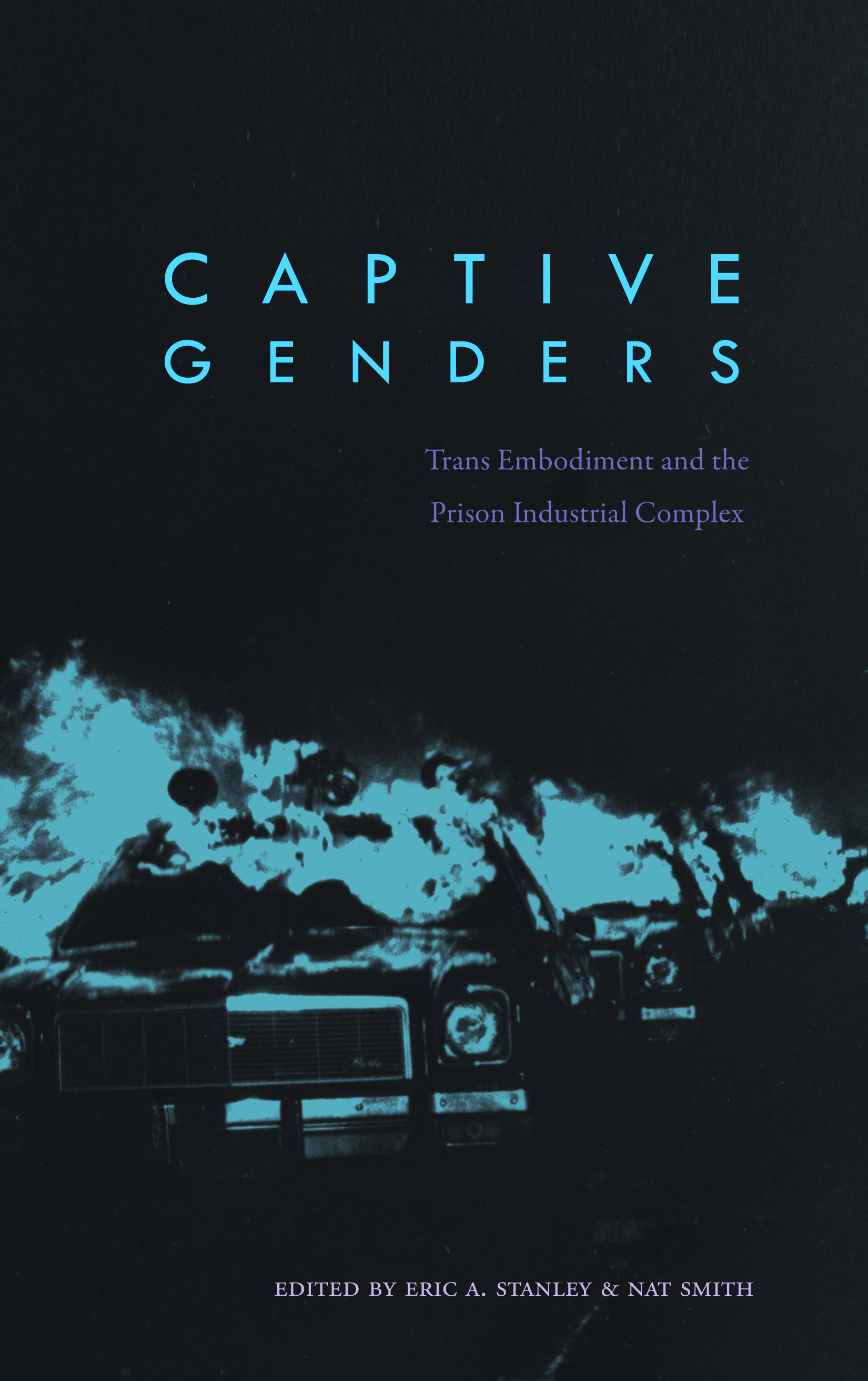 Captive Genders: Trans Embodiment and the Prison Industrial Complex, due in August from your own AK Press, is a collection of essays representing years of struggle in the transgender, gender variant, queer liberation movements, and the movement for the abolition of the prison industrial complex. It is the first of its kind—not simply a bridge, but a space for discourse about the linkages between these struggles. A vital new look at how gender and sexuality are lived under the crushing weight of corporal captivity!


