Showing posts with label Occupy Wall Street movement. Show all posts

Communism, A New Beginning? Conference Now Online

We're pleased to finally post video from our Communism, A New Beginning? conference from back in October in the debut of our incredibly novel YouTube page. It's an interesting look back to a weekend of what was the first month anniversary of Occupy Wall Street; around when Étienne Balibar spoke on “Communism as Commitment, Imagination, and Politics,” peaceful protesters just uptown at Times Square were arrested and en route to Central Bookiong.

Here is a guide to the talks given at this conference:

DAY 1
Alain Badiou: Politics and State, Mass Movement and Terror (presented by Bruno Bosteels)


Frank Ruda: Remembering the Impossible. For a Meta-critical Anamnesis of Communism


DAY 2
Bruno Bosteels: On the Christian Question

Susan Buck-Morss: Communism and Ethics

Adrian Johnston: From Scientific Socialism to Socialist Science: Naturdialektik Then and Now

Étienne Balibar: Communism as Commitment, Imagination, and Politics


DAY 3
Jodi Dean: Communist Desire

Slavoj Žižek: Freedom in the Clouds


Watch all eleven and a half hours of the conference on our playlist here.

Žižek on Occupy & the Arab Spring (video)

Slavoj Zizek in an interview for Germany's Deutsche Welle television, talking about Occupy, communism and the need for a reinvention of democracy.


Slavoj Žižek is regarded as one of the ideological pioneers of the Occupy movement, but he says its demands don't go far enough. Žižek sees no future for capitalism and is calling for a radical break with the past in favor of a new social order.

Slavoj Žižek on the Occupy movement for Al Jazeera— videos and transcript

Slavoj Žižek has been interviewed by Al Jazeera to give his unique perspective on the tumultuous changes happening in the world financial and political systems. In an extensive conversation with Tom Ackerman, Žižek discussed the Arab Spring, London Riots and the Occupy movement, as well as the various financial and political crises across the world from Europe to India. Throughout the discussion, Žižek explored the themes of violence across the political spectrum and his irresistible desire to provoke friends and enemies alike.


Visit Al Jazeera to view the interview in situ.


 Žižek also visited St Marks bookshop to discuss his views on the Occupy Wall Street protest.

Žižek argued that now was the time for careful, critical thinking in order to avoid the Left being paralized by melancholy. Impose Magazine has produced a transcript of the talk:
I will simply begin by certain historical observations. You probably notice how some people, and I think precisely the wrong people, started to celebrate the Wall Street events as a new form of social carnival: so nice, we have there this horizontal organization, no terror, we are free, egalitarian, everybody can say whatever he or she wants, and so on, all that stuff. It is as if some kind of a carnivalesque collective experience is returning. And this tendency, much more than here, is alive, as you can expect, on the West Coast. A couple of days ago at Stanford they told me that—the other Sunday, about 9 days ago—that in the center of San Francisco, a guy speaking on behalf of those who occupy, said something like, “They are asking you what's your program. They don't get it. We don't have a program. We are here to enjoy ourselves. Have a nice collective experience,” and so on and so on. That's precisely what I want to render problematic. How? You know, I would like to start with maybe a surprising point: the relationship between melancholy and prohibitions. The idea is the following one: modern subject paradigmatically is melancholic and the thing he is melancholic about, the lost object, is precisely collective, transgressive experience of carnival. For example, there is quite a nice a book from 2007 by Barbara Ehrenreich, Dancing in the Streets, where her thesis is that with modernity proper, not renaissance, what is lost is precisely this collective carnivalesque experience: we are no longer dancing in the streets, pleasure becomes a private thing, and so on and so on.
What I want to problematize is precisely the implicit causality, which is: first something was prohibited, or rendered inaccessible—collective dancing in the streets, whatever—and then we get melancholic. But I think it's the opposite way around. I think that melancholy comes first and prohibition is a way to avoid the deadlock of melancholy.
One has to be very precise here about the structure of melancholy. The usual, I call it in a friendly way, [?], Judith Butler reading is that melancholics are more radical, faithful than those who go through the work of mourning. The idea is that mourning, the Freudian [?], means to accept the loss of the object. You work to it symbolize the loss and you pass over to the real object. Why? A melancholic is not able to drop the object, remains faithful to the object. Those of you know Judith's work on gender and so on: remember what's her precise point. A kind of a tricky, ethical, strictly ethical, rehabilitation of both gay and lesbian homosexuality. The idea is that our first object of libidal investment is the same sex parent. Why? The price for becoming normal heterosexual is that you identify with the lost object, and in this way you become the normative subject, like a woman identifies with mother's feminity, a son with father's masculinity. And in this way, you accept the loss because you yourself identify with the lost object and become normal. She delves into this in detail if you want, in her maybe best book, I claim, The Psychic Life of Power. And then the idea is that gay people are a little bit more ethical here. They don't accept the loss of the, as it were, primordial object.
Okay, I see here many problems. The first one is, you know that Butler's basic theory of  gender is that gender is nothing natural, our gender identities are constructed through performative practices, re-enactments, so on and so on. My first very naive question here is: if this is true, how then can the child identify with the same sex parent prior to any performative identification and so on? It's as if the child nonetheless experiences sexual difference, father, mother before... okay it's another one.
What I want to say is that I want to problematize the underlining notion of melancholy. I think a good old-fashioned return to Freud, which has political bearing today, is very helpful here. Namely if you read closely Freud in his Mourning and Melancholy, he says something almost exactly opposite. His point is not melancholic subject more remains faithful to the object—no no no. He says something wonderful: he says that melancholy is something like mourning in advance. A melancholic treats the object of libidinal investment as lost while the object is still here[...]


 Visit Impose Magazine to read the transcript in full.

Arundhati Roy @ Occupy Wall Street

Arundhati Roy spoke at the People's University in Washington Square Park, New York on 16th November.


What you have achieved since 17 September, when the Occupy movement began in the United States, is to introduce a new imagination, a new political language into the heart of empire. You have reintroduced the right to dream into a system that tried to turn everybody into zombies mesmerised into equating mindless consumerism with happiness and fulfilment.
She went on to outline some possible demands for the Occupy movement:
We want to put a lid on this system that manufactures inequality. We want to put a cap on the unfettered accumulation of wealth and property by individuals as well as corporations. As “cap-ists” and “lid-ites”, we demand:
• An end to cross-ownership in businesses. For example, weapons manufacturers cannot own TV stations; mining corporations cannot run newspapers; business houses cannot fund universities; drug companies cannot control public health funds.
• Natural resources and essential infrastructure—water supply, electricity, health, and education—cannot be privatised.
• Everybody must have the right to shelter, education and healthcare.
• The children of the rich cannot inherit their parents' wealth.
This struggle has re-awakened our imagination. Somewhere along the way, capitalism reduced the idea of justice to mean just “human rights”, and the idea of dreaming of equality became blasphemous. We are not fighting to tinker with reforming a system that needs to be replaced.
Visit the Guardian for a full transcript.
Arundhati Roy is a contributor to Kashmir: The Case for Freedom (out now).

Occupy Wall Street Draws Massive Turnout in NYC and Across the Nation to Mark 2-Month Milestone

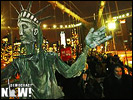
http://www.democracynow.org/images/story/89/20789/OWS-brooklyn-bridge-liberty.jpg
The Occupy Wall Street movement entered its third month Thursday with protests against the economic system in dozens of cities across the country. Reports estimated some 300 people were arrested nationwide, with the majority of the arrests taking place in New York City when protesters attempted to shut down the New York Stock Exchange. "We effectively shut down Wall Street this morning. We did it with our stories, with our bodies, with our hearts," says one of the organizers of the action. Democracy Now! reporter Ryan Devereaux filed this report. [includes rush transcript]


JUAN GONZALEZ: The Occupy Wall Street movement entered its third month Thursday with protests against the economic system in dozens of cities across the country. Police report over 300 people were arrested nationwide, with the majority of those arrests taking place here in New York City when protesters attempted to shut down the New York Stock Exchange. Democracy Now!’s Ryan Devereaux was there and filed this report.
PROTESTERS: Whose streets? Our streets! Whose streets? Our streets! Whose streets? Our streets! Whose streets? Our streets!
RYAN DEVEREAUX: Thousands of Occupy Wall Street protesters swarmed the streets of Lower Manhattan Thursday morning, kicking off a day of mass demonstrations and the arrest of well over 200 people.
PROTESTERS: Shame! Shame! Shame! Shame! Shame! Shame! Shame! Shame!
RYAN DEVEREAUX: After weeks of planning, protesters chose to clog the Financial District with a series of staggered marches, entering the Financial District from multiple directions in an effort to delay the opening bell of the New York Stock Exchange and shut down Wall Street. The demonstrators linked arms and formed human barricades in front of key intersections in the area. According to organizers of the action, online RSVPs for the protest tripled after protesters were evicted from their base of operations at Zuccotti Park, renamed Liberty Square earlier this week.
PROTESTER: Well, we are hearing from Occupy movement occupations in other places that have been evicted, but, you know, you can’t evict an idea whose time has come. And I think people are getting stronger every day and feeling like, you know, this is the time to start movement building and looking towards the future, building an economic justice movement that works for everybody.
RYAN DEVEREAUX: The city responded to the demonstration with full force. At least four helicopters hovered overhead while scores of NYPD officers, vehicles and barricades could be seen on every street. Police used batons and physical force to break up human barricades and forcibly arrested protesters who defied orders to stay out of the street. The department claims more than 240 people were arrested over the course of the morning. Though the opening bell did ring and Wall Street managed to conduct business as usual, the daily operations of the Financial District were significantly altered by the day’s actions. The protesters largely viewed the demonstration as a success and a declaration that the Occupy movement is still strong.
Lisa Fithian is a longtime organizer who became involved with Occupy Wall Street prior to the September 17th protest.
LISA FITHIAN: Today was an amazing demonstration of people power. We had thousands of people pour into the streets around Wall Street, marching together strongly, dropping off hundreds of people at each access point, that it was closed down. We set up human barricades, people linking arms, preventing people from getting inside. We effectively shut down Wall Street this morning. We did it with our stories, with our bodies, with our hearts. And I’m very proud of what we did here today, because we showed the world that we can come out—they can evict us from our homes, but they can’t take us out of the streets, and they can’t stop our spirit. And we put our bodies out today. People were arrested, blocking people coming in. And it’s been a huge day so far. And I look forward to see what we do the rest of the day, the march later today and actions around the country.
RYAN DEVEREAUX: For Democracy Now!, this is Ryan Devereaux.

David Harvey at #OccupyLSX—“This is going to change politics in a very fundamental way”

Last Saturday, November the 12th,  David Harvey visited Occupy London Stock Exchange. The author—amongst others—of A Companion to Marx's Capital and Spaces of Global Capitalism described Occupy LSX as “a marvelous kind of site” and invited the protesters to “keep at it, keep at it, keep at it.” We publish below the full speech, transcribed by Elaine Castillo.


"This is, this is absolutely fabulous, this is fantastic. I mean, you know, this is great—I couldn’t imagine that London could get like this! And you’re doing a really, really great job. And this is really, I think, going to change things.

Because one of the things that I think we’re learning over the last few years actually and particularly over the last few months, is that it’s people—on the street, in the squares—that really matters, in the end. Because that’s the only political force we’ve got. They’ve got the money, they can buy politics, the can buy the media, they can buy anything they want. We don’t have that. The only thing we have is people. And a mass of people. And the more people mass on the street, the harder and harder it becomes for them to say, ‘Oh, no, your interests are not our interests.’

And the other thing that needs to be established here is that, you know, we live in a world where people talk about the importance of public space. But most of the time the public is not allowed to be in that public space. What you’re showing is: people belong in this public space. And when we get in this public space, we can turn it from a public space into a commons. Into a political space. Where we can start to discuss and understand, and start to militate against the incredible, incredible concentrations of wealth and power.

And we’ve been through something called a crisis, a crisis for whom? Actually, you look at the number of billionaires around the world, there are about 30% more billionaires now than there were three years ago. The crisis has been a way of assembling even more wealth in fewer and fewer hands. And the way in which it is done is to go after people who are the most vulnerable. That is, you extract wealth from those who can least afford to have that extraction visited on them.

And at the same time, this crisis is one where the real questions are never being addressed. And the three big questions indeed I think to be addressed are these: firstly, there’s the question of global poverty. And it’s not only global poverty but it’s global inequality. And it’s not only inequality of wealth and inequality of income, but it’s the inequality of political power. That in fact, that wealth, that income, is being used to buy politics. And this of course this is a bit of an old tradition, I mean, in the United States, Mark Twain said of the US Congress, he said: ‘The United States always has the best Congress that money can buy.’

And this is actually how politics has been evolving, over the last 30 years in particular. More and more money buys influence and buys political power. It also structures the media. Increasingly we find it dominates what’s going on inside of universities. It dominates our educational system, so that universities increasingly become places where all you learn is neoliberal ideology. Where all you learn is corporatist managerial techniques. And those corporatist managerial techniques are about actually how to squeeze more and more money out of those who can least afford it.

Now, one of the ways in which people like to take on the question of global poverty is this. They say, Well, okay, we should have more and more NGOs, we should set up, you know, things and try to help people in poverty by doing this and doing that, you know, dividing blankets here and a bit of medical care there. Which is not all bad. But the problem, I try to say to people who are into that, the one thing you don’t seem to understand, is that you cannot solve the problem of global poverty without going after the accumulation of global wealth. And until you all leave your anti-poverty campaigns and you actually join the anti-wealth campaigns, nothing’s going to happen.

I mean, I’m old enough to remember the anti-poverty rhetoric of the 1950s and I remember it in the 1960s, I remember it in the 1970s, and the 1980s—-and then we had the millenium goals, ‘We’re going to eliminate global poverty by 2015,’ and here we are, four years to go, and it’s much worse than it was. We hear it again and again and again. And the reason that happens is that the solution we are told that must be applied to solve global poverty is the very set of mechanisms that produce it. That is, free markets, free trade, free right on the part of capitalist class to exploit, to the hilt, everybody that they can get their hands on.

Furthermore, it’s not only about exploiting labor. What is now going on is that we are finding more and more that accumulation of wealth is through the dispossesion of others’ wealth. I mean, the capitalist class doesn’t even know how to produce wealth anymore. What they are very good at is stealing. They’re good at robbery. they’re good at actually legalizing the extraction of wealth by all sorts of means. ‘Eminent domain’, ‘move populations out of here…’ And right now, worldwide, there is what we call a ‘land grab’ going on. That is, an attempt to color all of the resources of planet earth so that, actually, a small group of people effectively control all of the resources which allow social life to flourish. We cannot let that concentration of wealth continue. It has to be stopped. It has to be reversed.

And how can it be reversed when we don’t have the money to buy politics, when we don’t have the money to buy the media, when we don’t have the money to dominate the television, when don’t have all the… how do we do it? Well, you’re showing ow you do it. You assemble in places like this. And you stay in places like this. You don’t say, We’re going to have a demonstration and then go home. No. You stay. You stay.

And the fact that you’re staying is, I think, the most, one of the most significant political events that’s actually happened, over the last ten, fifteen, even fifty years. And I think that is absolutely why this is such a fabulous situation that you’ve created. You’re taking a public space, you’re turning it into a commons, and you’re saying, ‘Our intersts have to be heard, our voices have to be heard.’ And at this particular point, it doesn’t really matter exactly what you’re saying, the most important thing is that you are here, and you’re goddamn staying here.

Now I suggested that one of the big problems in the world is global poverty, now that’s associated with something which I think is another aspect of our political situation. Capital works in such a way that it incurs certain costs in what it does. But what it also does is to try to shed those costs and make somebody else liable for them. And there are a whole bundle of costs which are associated with the reproduction of society. We talk about education, we talk about health care, we talk about basic human services, we talk about caring for the elderly, we talk about dealing with the problems that are created through alienation in terrible work environments, we talk about all of those issues. Well, the economists have a little word for this. They call it ‘externalities.’ And what’s meant by that is actually you take a cost which you should bear, but you get rid of it. You turn the cost into an externality that somebody has to pay for.

Well, since Thatcher, there’s been a systematic assault, to try to turn more of the costs of social reproduction into externalities. Costs that capital will not bear. ‘You bear the cost of your own education, you bear the cost of your own health care. and if you get sick and you die, that’s your own fault. It’s not capital’s fault.’

Now in the 1950s and 1960s, the state was forced by political circumstances to bear some of those costs and to tax capital, to bear some of those costs. But what Margaret Thatcher started to do was to say, ‘Look, we are actually not going to pay those costs anymore, they’re up to your wn personal responsibilties, it’s up to your own personal savings, it’s your own personal life and you have to take care of it, and if you don’t take care of it and get into trouble, that’s your problem.’

Now that was what Thatcher launched, and actually there’s a pattern that goes on here. Everybody thought when Thatcher was gone—-got rid of Major as well—-that things would change. No! We got Tony Blair. And what did Blair do, he deepened what was going on. Blair started to introduce the top-up fees at universities, Blair is the one who started to push this Thatcherite agenda even further. And right now what we’ve got is a situation where the Thatcherite agenda is with us even though she is long gone.

And this is a global problem. I mean, I was in Chile recently, fabulous situation in Chile, I hope you can establish links with then. The students there have occupied all of the public universities. And mind you, they’re not moving! They’re not going anywhere and they’ve been doing it for four or five months. Quite a few of the high schools ae actually occupied. And what they’re saying is this:

‘Pinochet privatized all of the educational system; when Pinochet went and we got social democracy, we got rid of the dictatorship, we imagined that things would change. They didn’t change; in fact, they’ve got worse. So what we have to do is to end that process that Pinochet started.’ This is what they’re saying.

And we have to end what Thatcher started, and reverse it entirely. In other words, what we have to have is a political program to end the whole Thatcher era because it has not ended at all, and what we see with the current conservatives right now is that they want to make it even more Thatcherite than Thatcher.

That this, if you like, what the political task is. To force capital to bear all of those costs that it doesn’t want to bear. It should take care of education. We should have a free decent education for everybody. And it should be an equal quality education; none of this nonsense about, If you go live in this suburb, you get decent education and if you live in the inner city, you get crap. No. We should actually equalize educational opportunity everywhere. And the same occurs with questions of health care. The same thing happens with all of the forms of social services; they have to be revolutionized.

They have to be actually transformed in such a way that they’re not run through some abstract bureaucracy but they’re run on a popular kind of basis. In other words, what we want is not simply the restablishment of some bureaucratic welfare state, what we want is the restoration of the right to decent health care, decent caring, and for that to actually be then rendered on a popular basis. It is, if you like, popular assemblies that should decide about hospital populations, it’s things of that sort that need to be dealt with in a much more democratic kind of way.

The other huge problem there is globally is the problem of environmental degradation. Again, capital does not want to bear those costs. It says basically, well, if islands go underwater because of global warming and sea levels rise, let other people bother with the costs. Not us. So again, it’s a matter of real costs which are visited upon people, all around the world—-indigenous populations in particualr are being very hard hurt by all of this. These costs have to be brought back and capital has to be forced to pay those costs. But they’re not going to do it voluntarily; they’re only going to do it if they’re forced to. And they’re going to be forced by political process, and they’re going to be forced by political oposition.

So those it seems to me are the two big global issues that we face, and it’s going to take a global movement to deal with them. And what we see is a global movement emerging. I mean, there have been elements of it that have been working for a long tme, you have things like, groups like the landless peasant group in Brazil; fantastic movement. You have the Chilean students who have been militating along these lines now for some for or five years. Let’s give a shout for the Chilean students…

We have a Maoist insurrection in Central India, which is portrayed as a very cruel and horrible kind of thing, but it turns out if you read Arundhati Roy, or something like that, these are people who are really struggling, just to say alive, in the circumstance where they’re constantly being attacked by the political power and the police power of the state apparatus. And the same would be true in countries like Bolivia, where you see indigenous populations mobilizing, and they’ve mobilized in very very strong kinds of ways. So all around the world there is a growing sense that the system which has been constructed does not and cannot work, and furthermore it must not be allowed to work any further.

And there is, to me anyway, one of the big final problems, which is that capital is always about growth. You see the newspapers, and what are they saying, they say, ‘Oh, there’s a crisis, we have no growth.’ And people only stop talking about criss when we get three percent growth minimum. Which means that this form of society we live in is actually given over to compound growth forever. Three percent compound growth forever. Now think of that for a moment. Three percent compound growth on all the resources that we consume. Three percent compound growth on all the money which we accumulate. When capital was about what was happening in Manchester and Birmingham, and that kind of thing in say 1820, three percent compound growth for a long time looked okay. I mean, there were all these areas of the world that hadn’t been conquered by capital yet, you know, Asia, China in particular, there were plenty of places to go.

So where does the three percent growth come from now? The whole world is saturated, saturated with consumer goods, saturated with that growth. And what has to happen is we have to start to think about the move towards about a zero growth economy. and as we think about that, we have to understand very clearly that that is a non-capitalist economy. That is a non-capitalist economy for a very simple reason that capital is about accumulation, it’s about growth.

And what we’re moving to right now is a situation of low growth, but continuous capital accumulation by that small group that controls most of the resources. And so three percent growth is going on for them, and their rates of remuneration continue to rise. I mean, I thought it was obscene and wrote violently about it back in 2003, when the leading hedge fund managers around New York City in one year received 250 million dollars of personal compensation just for themsemlves, I thought that was grossly and absolutely unethical. And then in the middle of the crisis just two years ago, the top five hedge fund owners in New York received, in personal remuneration, three billion dollars each in one year.

Now what my students say to me is, ‘How do you become one of those?’

And I say, ‘Well, you know, you can go try, but they’ve got it all locked up, there’s no way you’re gonna get it; the only way you can get a piece of that action is to make sure you reclaim it back.’
Now when you look at the structure, when you say, look at the bonuses, the billions of bonuses—
(microphone shorts out briefly)

…yeah, bonuses, you know, the thing that struck me about that, the very year they were receiving something like, in Wall Street they were getting something like, 40 billion dollars in bonuses in one year. In that very same year about 2 million people lost their houses to foreclosure. And what that meant was, there was actually a transfer of wealth going on. Because all of those houses, may of which were illegally foreclosed, were actually, then, that wealth was flowing up to the coffers of the bankers. This is what I mean by predatory practices, this is what I mean by stealing. The capitalist class doesn’t actually work anymore; it uses the financial system to steal.

Now one of the things that occurs to me, and I think this is significant, is to start thinking about how to organize political movements that actually have a big impact. And I want to give you just a couple of examples in recent years of political movements that have had a big impact in the short term and have some long term lessons to teach us.

One movement I’ll mention first is the immigrant rights movement of 2006 in the United States. There was at that time a proposal to criminalize all illegal aliens. Now this is a very terrible thing to propose. And what happened was, the response was, immigrant workers, many of them illegal, decided they were not going to go to work. And when they decided that, collectively, suddenly what we saw was: cities stopped. Los Angeles closed down. Chicago closed down. New York almost closed down, San Francisco almost closed own. And many other places, companies seeing what was happening, particularly those employing illegal workers, just decided they weren’t going to open their doors anyway, there was no point.

Now what this showed was a tremendous show of force. A tremendous show of force. We can close whole cities down. And actually when you start to look at it, you see that in closing the city down, you can actually stop capital accumulation.

We saw an unfortunate example of that in the wake of 9/11 in New York City. The city was shut down, you couldn’t pass through the bridges, you couldn’t use the tunnels, you couldn’t move, and that went on for about two or three days. And then all of a sudden people realized if this went on for much longer, this was the end of capitalism. So the mayor came on and said, For god’s sakes, get out your credit cards and start shopping. For god’s sake, get in to the restaurants and go to the Broadway shows and just go back, you know, and… enjoy the… the… the ‘situation.’

So what you need, what is clear, is that if you stop the movement of capital, and it’s very easy to do—-cities are very vulnerable, the food chain into New York City, if you disrupt that, this is a major catastrophe. And there’s a tremendous amount of political power. So one of the thing that we have to think about is how to organize political actions in the city that actually have an impact upon how the city works. And as you do that, start to use that as a threat because we need to mobilize in such a way that we can genuinely threaten major commercial and financial interests.

And one of the other examples I would mention would be a city like Cochabamba in Bolivia or El Alto in Bolivia. I mean, El Alto, essentially, the whole city went on strike. And it brought down two presidents. And because it brought down two presidents, it meant that Evo Morales could get elected.

So yes, indeed, bring down David Cameron, how are you going to do that? But there’s a problem with that, which is you would like to think if you bring down David Cameron, there would be someone on the other side who would do what you want to see done, but there’s not. So what we need to do is to start to build a political force that forces someone on the other side to do what you are asking for. Which is: move away from this gross inequality of wealth, take care of the environmental dilemmas, and do something radically different to end Thatcherism. That is what we have to do. Clean it out, clean it out, start all over again. Start all over again, how do we do that?

Well, you have to start from the bottom up. And this is again something that’s very significant here, that this movement is not guided by some ideology from the top down, it’s guided from the bottom up and that is crucial.

Because until we know how to create democracy at the local level and then build that democracy into configurations that remain democratic right to the top, then we will not be able to implement a program. We will see good ideas co-opted by capital. And that is one of the most serious difficulties of any political movenent; you come up with good ideas, and then they co-opt them for their own purposes. No.

Just going back to the immigrant rights movment, the interesting thing about it was the way it got demobilized was actually dividing immigrants from other low-paid workers. And in particular it pointed to the immigrants, who were mainly Hispanics, and the right wing had this enormous propaganda campaign in which it said that basically: ‘Unemployment in the African American community is due to Latin American immigration.’ It divided. It divided. And because it divided, it ruled.

So one of the things that it seems to me that’s terrific about these assemblies, is that it seems to me there is a spirit that says, ‘Even though we are very different and have different ideas, we will not be divided. Furthermore, not only will we not be divided, but we will not be diverted.’

Because the way in which they operate is generally to create some sort of argument that kind of says, ‘Well, you’re really talking about the wrong thing, why don’t you worry about this over here, rather than worry about that over there.’ In other words, there are tremendous attemps in the media and elsewhere to divert you from what it is you want to do. Tremendous attempts will be fostered to divide you.

And it will be hard sometimes. I mean, I’ve been in political movements where it’s hard not to be divided. It’s hard to stick with your own position and at the same time compromise with others who have very different positions. These are not easy things to do. But if you set yourself the rule: I will not be diverted, I will not, we will not be divided. Then it seems to me, you have a long way to go and in fact you’re gonna have a terrific impact upon the political climate of this country.

So these, it seems to me, are some of the issues that I would want to bring to the table. I left New York about four days before they occupied wall street so I haven’t actually been to Wall Street yet, this is my first time to one of these meetings. And I think this is absolutely great, and I think when I get back I’m gonna get to try to get together with the Wall Street folk as well. And what I’m sure they would want me to say to you is: Keep the struggle going. Keep going. The struggle continues, as they say. Keep it going. And that is the crucial question: that we have to be persistent, as well as undiverted and undivided.

So I’m going to stop here because I want to have more of a conversation and get kind of responses from what you think, and how you think, because I want to take some ideas back with me to the United States when I get there and perhaps also when I return to Argentina, try to have some conversations there. Because this movement is not just about London. You’re in the heart of the beast, the belly of the beast. And your job is to give the beast stomachache.

But the more stomachache they get, the more grouchy they’re likely to get. So you have to understand that that is likely to happen. And then you have to stiffen your resolve. This is going to be a long haul for all of this, I think, and so I congratulate you on what you’ve done. This is a marvelous kind of site, I think it’s a marvelous initiative that you’ve taken, and I think that, like I say, this is going to change politics in a very fundamental way. And keep at it, keep at it, keep at it.”

Transcript by Elaine Castillo.

Social Justice, Antiwar Protesters to Occupy D.C.’s Freedom Plaza in “October 2011” Protest


October2011_webTomorrow, thousands of people are expected to gather in Freedom Plaza in Washington, D.C., for a “people’s assembly” organized by a movement calling itself "October 2011." They plan to occupy the plaza until they have brainstormed sustainable solutions to promote universal healthcare and economic justice, as well as end the nearly decade-long Afghanistan War. We speak with two of the movement’s organizers, Kevin Zeese and Dr. Margaret Flowers.

Zeese is a lawyer who works with ItsOurEconomy.us, while Flowers is a pediatrician who serves as a congressional fellow for Physicians for a National Health Program. “This came out of seeing that all of the issues — the work in the peace movement and the wars, the work for single payer, the work for environmental justice — have been hampered by the same obstacle which is the corporate control of our political process and the corporate media message,” Flowers says. “We saw the need back and to bring these movements to gather to unite because we do have the strength in our numbers.” [Includes rush transcript]


AMY GOODMAN: I’m Amy Goodman with Nermeen Shaikh.

NERMEEN SHAIKH: Tomorrow, thousands of people are expected to gather in Washington DC’s Freedom Plaza for a People’s Assembly organized by a movement calling itself, October 2011. They plan to occupy the plaza until they’ve brainstormed sustainable solutions to promote universal health care and economic justice, as well as end the nearly decade-long Afghanistan war.

The organizers explained why they chose the month of October to launch their movement.
OCTOBER 2011 SPEAKER: This October marks the beginning of the 11th year of the U.S. invasion and destruction of Afghanistan.
OCTOBER 2011 SPEAKER: This October, austerity measures will no longer be limited to individual states
OCTOBER 2011 SPEAKER: This October, federal budget cuts will hit home.
OCTOBER 2011 SPEAKER: This October, the federal budget will deliver an unlimited war funds.
OCTOBER 2011 SPEAKER: Corporate subsidies and tax breaks for the super rich...
CHRIS HEDGES: While cutting services for human and environmental... needs.
OCTOBER 2011 SPEAKER: But in October, a growing number of us will mark the beginning of something else in the United States...
OCTOBER 2011 SPEAKER: A moment when we will unite...
OCTOBER 2011 SPEAKER: To demand an end to a system that puts profits and warfare over the welfare of people and the environment...
AMY GOODMAN: That’s a clip from the video produced by October 2011. For more, we’re joined by two of the movement’s organizers, Kevin Zeese and Dr. Margaret Flowers. Joining us from Baltimore, Maryland, Kevin’s lawyer who works with It’s Our Economy, and Margaret is a pediatrician who serves as Congressional Fellow for Physicians for a National Health Program.

Kevin, Margaret, welcome to Democracy Now!, it is great to have you with us. Talk about what the plans are for the anniversary of the Afghanistan War, one decade in, 10 years in, linking it to all the other issues. You started this many, many months ago.

DR. MARGARET FLOWERS: That’s correct, Amy, this came out of a, kind of, a thing that all of the issues the work for in the peace movement and the wars, the work for single payer, work for environmental justice have been hampered by the same obstacle which is the corporate control of our political process and the corporate media message, and saw the need back then and to bring these movements to gather, to unite; because we do have the numbers. We do have the strength in our numbers. We wanted to mark the 10th anniversary of the war and also, kind of, the important pieces, the first week of the federal budget, because it really links the fact that we’re using our resources for war and exploitation of people in the planet and not to meet our own human needs. So, we wanted to bring those two together. On October 6th in Freedom Plaza, as you said, thousands of people have pledged to come there, and we’re going to be focused on two key, kind of, elements.

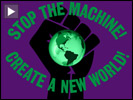
One is, stop the machine, which is corporatism and militarism, using non-violence, but, the other is create a new world, which is educating ourselves about the crises that exists in our country. We listed 15 corporate crises and all these crises have evidence based solutions. So, we’ll be talking about those, holding classes in the plaza, holding assemblies and coming up with, kind of, our list of what we want to see to address these crises.

AMY GOODMAN: Kevin Zeese, talk about how this fits in with the whole Occupy Wall Street movement. You started way before with the idea of precisely what they’re doing in York, and how long are people planning to stay at Freedom Plaza?

KEVIN ZEESE: We started six months ago. We were all frustrated by the inability of this government representing people’s interest and we really want to end a government by corporate role. So that’s the overarching principle. When we started to work on this, we didn’t know if the country was ready for it. Our first article we put out was called, "History is Knocking," and we were urging people to answer the call of history. Now we see with the occupations happening all over the country, that the time is right, the people are ready. They’re ready to revolt and ready stand up and say, enough of this. We are tired of 1% having wealth of 95%. We’re tired of 400 people having a wealth of 154 million of us. We’re tired of a feudal society and we’re going to revolt against it and that’s what this is. This is a revolt that is bringing people from all perspectives together.

What we’re in right now is a situation kind of like the Vietnam War draft. The economic insecurity of Americans is like the draft. It brings it home. It affects everybody. The draft affected people who were forced to go to fight in Vietnam. It affected all those families. Economic insecurity affects every American in this country except for that top 1% that keeps getting wealthier as we record poverty, increasing homelessness, decreases in income, people dropping out of the middle class.

Students leaving college with debts as big as my first mortgage, paying $500, $700 a month in a job market where there are no good jobs. So, people are ready to revolt and we’re going to stay the Freedom Plaza as long as we need to. I’m sure what will happen at the end of Freedom Plaza is we’ll evolve to the next step. We’re not going to go away. This is a long-term struggle to end corporate rule and to shift power to the people. That is what our goal is, to really create a participatory democracy, that’s the battle of the time; participatory democracy versus concentrated corporate wealth.

AMY GOODMAN: We’re going to leave it there. Kevin Zeese, lawyer and organizer, Dr. Margaret Flowers. october2011.org is the website. Tomorrow, Washington, D.C., is where they will be marching.

On the Occupy Wall Street ‘media blackout’

by Nathan Schneider 
 
(Credit: Wagingnonviolence.org) 
(Credit: Wagingnonviolence.org)

Among those part of and concerned with the Occupy Wall Street movement, it’s very common to hear complaints about the lack of mainstream media coverage. There’s even a sign at the occupation’s media center that says, “Welcome to the media blackout.”


To a large extent, the blackout is real. The New York Times and other local papers didn’t give the movement headlines until almost a week in, with the exception of a cover story in Metro that first Wednesday. And, while several local TV stations were at Liberty Plaza during the first week, their reports weren’t being picked up by national affiliates. Only recently has this begun to change.

Online, there have been accusations of outright censorship. Yahoo has admitted to “not intentional” blocking of emails with links to occupywallst.org, blaming their spam filter. (This excuse is not widely believed, but plausible—I’ve seen the site trigger non-Yahoo spam filters as well.) Twitter has similarly blocked #occupywallstreet from being listed as a trending topic. (This may be because it keeps being throttled by Anonymous bots—or, more conspiratorially, because a considerable stake in the company is owned by JPMorgan Chase, which also just donated $4.5 million to the NYPD.)

Really, though, what do you expect? Resistance movements should not count on coverage by establishment news outlets, much less favorable coverage. Mainstream media are usually a part of a movement’s opponent, and they certainly are in this case. The movement’s job, then, is to make its actions so irresistible that the media have to cover it, despite themselves. In an instructive essay about her experience doing media relations during the fight for civil rights in the 1960s, Mary King writes:
[A]ttentive news coverage can never be taken for granted or assumed. It must be won. Gaining the attention of the news industry is one of the central functions that must be planned by a nonviolent movement that hopes to succeed.
In this respect, Occupy Wall Street is already succeeding.

These protests, it must be recognized, are getting much more coverage than any other protest in recent years (with the exception of ones held by the well-funded Tea Party), including ones involving far more people. Like unions, celebrities, police, and many would-be participants, though, it took some time for the media to begin to recognize that something of substance is taking place. By definition, the establishmentarian mainstream media will always be slow to react to a dynamic grassroots movement. That this is the case here could even be a good sign for the movement’s long-term prospects.

Part of the blame for poor coverage, too, lies in the movement’s own media strategy, or lack thereof. From the outset, its organizers have focused primarily on creating their own media—just as Gandhi did during the Indian liberation struggle, and as so many other movements have since. The occupiers do this very well, with a (theoretically) 24-hour livestream, a newspaper, websites, and more. Meanwhile, many organizers have purposely avoided contact with mainstream media outlets, and no plan was in place at first for how to deal with them should they arrive.

Reporters—with the sole exception of me, after a lengthy discussion on the matter—were asked not to be present at the planning meetings before September 17. For the first week of the occupation, media relations was being overseen largely by one valiant but overworked college student with no previous experience in it (plus a probably-counterproductive onslaught of Twitter mentions directed against news services who failed to give coverage). Wire services weren’t being informed about upcoming events. Those reporters who did show up at the plaza were left to wander, without guidance about whom to interview or what was going on.

This is changing. Several older people with experience in media relations have joined on to help, as well as more skilled young people. Now there’s an email list, a calendar, a workflow, and the wisdom gained from a few mistakes—such as, for instance, Friday’s Radiohead concert debacle, which appears to have been the work of a rogue prankster. So there’s hope.

Something changed over the course of last Monday, for instance, at least in the heads of the species of made-up, spotlessly-dressed television news reporters who were swarming among the dirty and battle-worn protesters. In the morning—and their trucks were out bright and early—the reporters were after one thing and one thing only: the pepper-sprayed girls. A mere witness wouldn’t do, Mr. Channel 7 told me, gravely. His journalistic integrity forbade it. He had to have one of those poor girls, caught on by-then viral video, who had been pepper-sprayed with no apparent provocation by the NYPD’s notorious Deputy Inspector Anthony Bologna.

By afternoon, though, their attention shifted. Maybe it was because the sole pepper-sprayed girl who had been around that morning left. Maybe it was already old news. But then the questions they asked started getting more interesting. Instead of gory details, they finally began asking just what exactly all these people were doing in rechristened Liberty Plaza. And, after getting bored of asking sign holders “Why are you here?” and ogling at the generator-powered media center, they even became curious about the all-important General Assembly meetings.

They’ll probably never really get it, but, with time and help, they’ll get better. No mainstream news report, though, will ever substitute for seeing the occupation for yourself.


Nathan Schneider is an editor for the Waging Nonviolence website. He writes about religion, reason, and violence for publications including The Nation, The New York Times, The Boston Globe, Commonweal, Religion Dispatches, The American Prospect, and others. He is also an editor at Killing the Buddha. Visit his website at TheRowBoat.com.

Original article available here

The Occupation Is On The Move, Find a Big Bank Protest Near You

U.S. Senator Paul Wellstone used to say "sometimes you have to pick a fight to win one."

Now Occupy Wall Street has picked one, right in Jamie Dimon's backyard.

But it won’t stay contained in Zuccotti Park. While Brookfield Properties called the park a "public sanctuary" in 2005, they have apparently changed their minds. Mr. Zuccotti wants his park back and the police are preparing to clear it with new rules barring camping, sleeping and breathing.

They are too late. The train has left the station and the Occupation is on the move. From Manhattan to Hawaii big bank protests are planned. Everyone who cares about creating an economy that works for working people should get on board.

"Savvy Businessmen"

In 2009, President Obama told a group of 13 bankers "my administration is the only thing between you and the pitchforks." Now the pitchforks are being tuned.

It hasn't escaped notice of the 99% that while 1,000 top officers were jailed after the Savings and Loan debacle, not a single banker has been jailed for their role in collapsing the global economy. The only firm really punished in the entire affair was Lehman Brothers, allowed to fail by Bush's Treasury Secretary Hank Paulson.

When Obama took over, he failed to crack down on Wall Street, he failed to even tag the Banksters as the culprits for the global economic meltdown. Rather he praised Goldman Sach's Lloyd Blankfein and JP Morgan Chase's Jamie Dimon as friends and "savvy businessmen."

Into the void stepped the GOP, who made huge gains at the federal and state level in 2010. Never shy, the GOP spinmeisters stepped right up to name the culprits: us. Now, in states like Wisconsin, Ohio, Michigan, teachers, firefighters, nurses and other public workers are fighting for their lives -- in utter disbelief that they are being blamed as the cause of the economic downturn. The poor, the elderly and working families are being asked to pay more to close state budget shortfalls, while radical governors shell out billions in tax breaks.

The young people in Zuccotti are standing up to say enough is enough.

“We are the 99%”

As the Occupation of Wall Street enters its third week, the group has been criticized by media as not having a coherent message, as if a PR firm was a precursor to membership in our democracy. But from out here in Wisconsin, their message rings clear and true: The 99% percent has been shafted, our economic system is broken, and we need an economy that works for all.

The hopeful nature of the message, that change is possible when the monied elite have a stranglehold on our economy and our democracy, is itself remarkable and revolutionary. Too many Americans are ground down by opaque forces and feel powerless to change anything.

Messages like this one on the Occupy website resonate: "On September 27th, 2011, we marched on the Financial District's Luxury Night Out, where couples wore outfits that cost more than we will ever make in a month and looked at cars that cost more than we will ever make in a year, afterward, they went back to one of their many houses that cost more than we will make in our lifetime."

But for those who need a concrete list of demands, a working draft was produced though a consensus process on   September 29.

Lesson from Wisconsin: Pizza and Pizzazz

As someone who participated in the Seattle 1999 WTO protests and in the Wisconsin uprising, I offer a few observations as the “American Autumn” gets underway. The Occupiers have already learned a key lesson of Wisconsin, the physical occupation of a space can’t be beat. When folks are sleeping, eating and strategizing together, a lot of quality communication and consensus building gets done fast. New alliances can be forged, and quality pizza can be delivered from supporters across America.

Another important lesson from Wisconsin is don't forget to put the classy in class warfare. We learned from Wisconsin that fun is essential to turning out large crowds. Only in a safe peaceful space will your supporters feel comfortable bringing kids and grandma, and your numbers can grow day by day, week by week. If the police give you trouble, as they have in NYC, try not to rise to the bait.

Lessons from Seattle: Big City Police Are Not Your Friend

Although Wisconsin protesters were able to forge solid relationships with police and firefighters who saw they were next in the collective bargaining firing line, this was a rare occurrence. Police in big cities, whose entire careers have been spent protecting private property, will not be your friend.

This weekend there were 700 arrests in Manhattan as occupiers took to the streets, stopping traffic on the Brooklyn Bridge. Protesters charge that the police encouraged the march as a way of emptying the park and rounding up a large number of protesters and their leadership. Video shows police leading protesters onto an onramp on the Brooklyn Bridge where they are later corralled and carted away.

Protesters from the global justice movement -- which staged the successful 1999 WTO protests in Settle and forced the end of the “Millennium Round” of global trade negotiations -- can give you some advice based on subsequent battles. Police will infiltrate you by the dozens. They will identify and arrest your leaders without cause and hold them for as long as it takes.They will lure groups of you away for the sole purpose of corralling you and arresting you. Stay calm and protest on.

JP Morgan Chase Hearts the NYPD

As if more evidence were needed, news broke this weekend that JP Morgan Chase recently donated an “unprecedented” $4.6 million to the New York Police Foundation. “These officers put their lives on the line every day to keep us safe," chirped Chase CEO Jamie Dimon.

The big banks are worried about a wide-ranging investigation by New York Attorney General Eric Schneiderman into the Wall Street meltdown, not focusing on the small fry, but on the big fish -- the behemoth banks whose origination, pooling an securitization of mortgage-backed securities which turned our domestic housing bubble into a global economic catastrophe.

The banks freak every time Schneiderman drops a bomb such as “the markets didn't crash because we were paying too much to teachers.” Or how about “people are not going to be satisfied until they have a sense that those responsible have been held accountable." The Wall Street protesters are helping give Schneiderman a backbone.

Find a Protest Near You

A season of “Pay U.S. Back!” actions are planned for October under the banner of the "New Bottom Line" coalition, which among other things is demanding a financial speculation tax on the big banks. Find updates here.

Plus, the Occupation is spreading fast. You can find updates on many of the actions listed below at here.

  • In San Francisco, hundreds of protesters took to the streets targeting Bank of America, Charles Schwab and Wells Fargo.
  • In Seattle, hundreds of people shut down a Chase bank branch and 11 were arrested.
  • In Suncaidia, the Washington Community Action Network infiltrated the annual policy summit of Association of Washington Business, sponsored by Chase bank.
  • In Boston, 3,000 marched on Foreclosure King, Bank of America, to present their demands to stop foreclosures in the main lobby. More at Take Back Boston. Occupy Wall Street, Move On and organized labor is joining in with a major march planned for Wednesday, October 5.
  • Occupy Los Angeles is underway at City Hall.
  • Occupy Chicago is underway at the Federal Reserve bank.
  • Occupy Washington, D.C. starts on October 6 in Freedom Plaza. 
  • Refund California is planning a “home visit to a Wall Street executive" October 4 in Los Angeles.
  • Chicago is planning a Pay US Back Action October 9.
  • Minneapolis is planning a Pay US Back Action October 10. 
  • New York City is planning a Pay US Back Action October 11.
  • Occupy Milwaukee starts October 15. 
  • Denver is planning a Pay US Back Action October 25.
  • Honolulu is planning a Pay US Back Action November 5. 
  • Keep us posted on the actions planned for your neighborhood at the BanksterUSA Facebook page.
Original article:
The Occupation Is On The Move, Find a Big Bank Protest Near You


They are standing up for those who cannot be there right now. Here's the good news -- you can help, right now today -- no matter where you are:


Find the latest news, learn how to participate and support:

#OccupyWallStreet - COMMENT & ANALYSIS

#OccupyWallStreet is a church of dissent not a protest
Matt Stoller, naked capitalism

Last weekend, I spent a few days with the protesters downtown near Wall Street, and it was an eye-opening experience. The people there want something, but it’s not a list of demands, and it is entirely overlooked by the media and most commentators on the protest.

If all you read are news stories and twitter feeds about #OccupyWallStreet, the most trenchant imagery that will stick in your mind is that of police brutality, and the politics of Wall Street greed. The debate seems to be organized around whether the protest will be “successful” or not, how the protesters are stupid or a new American Tahrir Square, or rhetoric designed in a media sphere that maximizes attention. Glenn Greenwald suitably demolishes the sneering commentariat. But I think there’s something to add about what exactly this protest is, what it is doing, and most of all, what the people there “want”. They don’t have a formal list of demands.

And it’s obvious that this isn’t just about Wall Street, nor is it really a battle of any sort. There are political signs there attacking Fox News, expressing anger about Troy Davis, supporting the Iranian revolution, urging the Federal Reserve be reigned in, and demanding rich people pay their taxes. There are personal signs about debt, war, and medical problems. And people are dressed in costume, carrying lightsabers, and some guys are driving around a truck with a “Top Secret Wikileaks” sign on the side. I asked if they were affiliated with the site, and one of them responded with “That’s what the Secret Service asked”. Most of all, people there are having fun.

What these people are doing is building, for lack of a better word, a church of dissent. It’s not a march, though marches are spinning off of the campground. It’s not even a protest, really. It is a group of people, gathered together, to create a public space seeking meaning in their culture. They are asserting, together, to each other and to themselves, “we matter”.

Meaning is a fundamental human need. The act of politicization, of building any movement, is based on individual, and then group self-confidence. As Daniel Ellsberg said, “courage is contagious”. I’m reminded of how Howard Dean campaign worker and current law professor Zephyr Teachout characterized the early antiwar blogosphere and then-radical campaign of Dean, as church-like in their community-building elements. That’s what #OccupyWallStreet reminded me of. Even the general assemblies, where people would speak, and others would respond, had a rhythmic quality to them, similar to churches or synagogues I’ve attended.

By Matt Stoller, the former Senior Policy Advisor to Rep. Alan Grayson and a fellow at the Roosevelt Institute. You can reach him at stoller (at) gmail.com or follow him on Twitter at @matthewstoller.
(29 September 2011)


Gandhi goes to Wall Street

Susan Brooks Thistlethwaite, Washington Post
Protestors carry signs that say, “Bring Down the Wall, but this is not Berlin in 1989, it is New York’s financial district in 2011. They carry signs that say “Love, Compassion, Awareness, Understanding,” but this not Selma in 1965, it is Wall Street in 2011.

The #occupywallstreet protests in New York’s Wall Street district exhibit all the dynamics of the non-violent direct action movements of the 20th century as seen in the work of Mohandas K. Gandhi, Dr. Martin Luther King, Jr. and the April 6 movement in Egypt that so symbolizes the “Arab Spring.” These are the young Egyptians chanting “peaceful, peaceful” only this time while crossing the Brooklyn Bridge, not on a street in Cairo, or in front of a wall in East Berlin.

And like in Cairo and Selma and East Germany, they are met with force, sometimes even with brutality.

The police response follows Gandhi’s prescription for why non-violence is so effective; non-violent protest exposes the underlying violence of unjust systems, and the dilemma that non-violence poses to armed authority.

Susan Brooks Thistlethwaite, Professor, Chicago Theological Seminary. Former president of Chicago Theological Seminary (1998-2008), Thistlethwaite is a senior fellow at the Center for American Progress.?
(3 ctober 2011)


Don't Feed the Zombies: The Problem of Protesting the Thing You Depend On

Sharon Astyk, Casaubon's Book

A number of readers have asked me what I think about the Wall Street protests. In general I think public protest is usually a good thing, and I'm pleased to see demonstrations in favor of good things like corporate accountability and against bad things like climate change. I think there are plenty of reasons for political activism in our country, and am always pleased by it.

On the other hand, do I think that this is the beginning of something profound and important? I can't say for sure, but I would guess not. Protesting Wall Street isn't a bad idea - but there's a fundamental problem in marching and demonstrating against something you are wholly dependent upon.

The college students who are admirably taking the lead depend for their educations on investments and growth - private savings invested to enable them to go to college by parents, but also government subsidies and loans that must be supported by economic growth in order to continue. The very act of taking out a loan to support your education implies a presumption of growth - the idea that your earnings will grow in order for you to pay it back with interest.

Standing against Wall Street and calling them out to justify their implication in the political process and in issues like climate change is great - except that Wall Street gets its money in large part from, well, us. An economy that depends for 70% of its worth on consumer spending is not one in which one can look entirely to the powerful abstract evil of "corporations" but to the specific evil of that fact that all of us depend for food, clothing and shelter on those institutions we claim to deplore.

This is the same problem that leads those who protest middle-eastern oil wars to drive their cars to the demonstrations, to those who protest coal plants writing their angry blog posts on grid, coal powered laptops, and any number of other hypocrisies. Now hypocrisy itself is not evil, and it is generally inevitable - none of us can live here without implication in a larger economic system - all of us are complicit.

That said, however, the disconnect between personal action and political action, carefully fostered by a society that believes that personal choice is personal choice and has little to do with your political convictions, constantly undermines real political action. Yes, deplore Wall Street. Remember when you do so that while large corporations (or polluters or whatever) would prefer, ideally that you both love them and give them great big wads of cash, given a choice, all such institutions prefer the cash to our love. It is a very good thing to remind them that they are zombie institutions, but it helps not to feed the zombies your money - and that involves a radical reinvention of lifestyle.

None of us trust a politician who depends on the campaign dollars of those who oppose their fundamental values. Why should we trust ourselves to depend for food, shelter and our basic way of life on institutions that are also destroying that way of life? While recognizing that the Thoreau-model of perfect disconnection is not open to most of us, should we not hold ourselves to at least the same standard we hold public officials to - asking that we disconnect economically from the structures that warm the world, deplete its resources, etc... and that we participate as little as we can (and that means we are critical of our own excuses) in that degradation?

None of us will ever get this perfect - we live in our interconnected, oil fueled, coal warmed, economically messy society. Perfection is not the goal - but it does not take a vast contraction of earnings to send a much more impressive message than public protest can provide alone - if you want to change the world, stop feeding the zombies.
(3 October 2011)


Encounters with Occupy Wall Street

Louis Proyect, The Unrepentant Marxist

These are some very provisional thoughts on Occupy Wall Street, which is showing signs already of having a rippling effect across America. With recognition by both the protesters and commentators sympathetic and hostile that the Arab Spring has inspired the movement, we are dealing once again with the phenomenon of movements that cross borders, and that can even become global. This is not just something that the Internet has spawned. Back in 1968, when I was about the age of the people occupying Liberty Park, the May-June events in France were midwifed by the American antiwar movement and eventually served as a model for the movement for a “red university” in Yugoslavia.

The most notable aspect of this movement is that is the first to confront the new realities of the economic crisis and to articulate the grievances of the American people without being subject to the constraints of a reformist leadership. Obviously Wisconsin erupted over the same sense of economic resentment but the movement suffered from being under the control largely of the trade union bureaucracy and local Democratic Party officials. Instead of taking on the system full-bore, activists were diverted into a sterile recall campaign. As the activist I interviewed in the video that accompanies this article stated, he is not that interested in “politics”. I had asked him what his political experience amounted to before coming down to Wall Street, assuming that he would talk about Amnesty International or Greenpeace. It turned out that he understood “politics” to refer to ringing doorbells for candidates and he was not having any of that.

The intuition that the activists of Liberty Park had that they were speaking for the “99 percent” of Americans has resonated with the working class in a way that the organized left has never achieved. Starting with the traditionally left-of-center TWU leadership, the OSW activists are on the verge of winning over the heavy battalions of organized labor to their side. This is not because they have any special skills at winning over workers to their side. Rather it is because their action has resonated with deep grievances among working people.

... There is a very strong possibility that over the next five years or so the mass movement that is taking shape today might take on epic proportions and mount a serious challenge to the powers-that-be. It will be absolutely incumbent upon Marxists to figure out a way to relate to that movement not as learned professors chiding it from above but as dedicated participants whose loyalties are to the movement rather than their own group. If they can meet that challenge, the movement will be all the more powerful as a result. If they function in a narrow and self-interested manner, they will have nothing to offer.
(2 October 2011)


Understanding the Theory Behind Occupy Wall Street’s Approach

Mike Konczal, Rortybomb

The Occupy Wall Street protests have been collecting demands from people in order to create their own list. In their words, their demands are “a process” intended to allow people to “talk to each other in various physical gatherings and virtual people’s assemblies … [and] zero in on what our one demand will be, a demand that awakens the imagination.” I contributed the three demands I think they should consider focusing on over at Good Magazine here.

Here’s a really moving We Are the 99 Tumblr where people across the country are writing their stories on a sheet of paper and sharing them. This recession has scarred generations of Americans for the foreseeable future and yet few in power are really rattled about it.

There’s been a lot of back and forth, especially from liberals, about what the protestors are trying to do in their occupation. Where are their finely-tuned lists of concrete demands? What are the action items, spokespeople and who are the key influencers they need to reach?

... There’s a conscious focus on the methodology to create an explicit space of real, direct democracy. The main concern is the methods used for the expressing the actions of the community.

To me, with all due respect, the lazer-focus on the explicitly proper methods to the exclusion of all else reminds me a bit of cartoony High Liberalism Theory. The kind of theory where the point is to obsess on the proper type of auction for buckets of goods on the deserted island so wine snobs, beach bums and the hard-working shoemakers all are equally well off, instead of confronting the vicious, feudal hierarchies of power that actually exist.

But it isn’t just both the methods and the focus on methods that is unique. There’s an actual occupation going on in the park. And, as Stoller pointed out, it is designed to be fun. Is there something deeper about both the communal and festival spirit of the protests? It can be read as a reaction against the atomized, privatized forms of capitalism as it evolved into modernity.
(30 September 2011)

#OccupyWallStreet - NEWS

‘Occupy Wall Street’ protests gain steam, but movement’s goals remain unclear
Staff, Washington Post

“Occupy Wall Street,” a broad movement of protesters who have been gathering in New York and modeled roughly on the Tahrir Square protests held in Egypt, has gained steam in recent days. As Ezra Klein reported :


It didn't seem that the whole world was watching, at least not then. The next day, I tried to contact the protest's organizers for an interview, but it didn't come together. An effort to look up their demands online didn't yield much. I figured the protests would fizzle. Instead, they're gaining strength. Almost 1,000 protesters were arrested this weekend on the Brooklyn Bridge, and sympathy protests are spreading to cities all across the country. Occupy Wall Street is leading papers and news shows. The whole world, or at least the whole country, actually is watching.

The protesters are also gaining institutional support. MoveOn.org is sending e-mails about "an amazing wave of protest against Wall Street and the big banks has erupted across the country."

They're planning to join with organized labor to march to the Occupy Wall Street site on Wednesday. A live videofeed from the protests will kick off the liberal Campaign for America's Future annual conference, and Van Jones's 'Rebuild the Dream' coalition is staging a "virtual march."

The Occupy Wall Street protests are explicitly inspired by, and modeled on, the Tahrir Square protests in Egypt. And though that's a tough act to follow, it's clear the Occupy Wall Street protests are catching a fire all their own. The question now is what they do with it.

... Wonkbook today was about ‘Occupy Wall Street,’ the growing, decentralized protest movement that’s clashing with police in New York City, spreading across the country, and grabbing headlines across the world. It is also, somewhat unusually, a protest movement without clear demands, an identifiable leadership, or an evident organizational structure.

Decisions are made by the NYC General Assembly, which Nathan Schneider describes as “a horizontal, autonomous, leaderless, modified-consensus-based system with roots in anarchist thought,” and thus far, the General Assembly has decided against yoking the movement to a particular set of goals, or even a particular ideology.

Which is all to say that it’s important to try and understand the movement on its own terms, rather than the terms most of us are used to. Here are five places to start ...
(3 October 2011)

Nice summary of a complex, breaking story. -BA


Anti-Wall Street Protests Spread to Other Cities

Erik Eckholm and Timoty Williams, New York Times

A loose-knit populist campaign that started on Wall Street three weeks ago has spread to dozens of cities across the country, with protesters camped out in Los Angeles near City Hall, assembled before the Federal Reserve Bank in Chicago and marching through downtown Boston to rally against corporate greed, unemployment and the role of financial institutions in the economic crisis.

With little organization and a reliance on Facebook, Twitter and Google groups to share methods, the Occupy Wall Street campaign, as the prototype in New York is called, has clearly tapped into a deep vein of anger, experts in social movements said, bringing longtime crusaders against globalization and professional anarchists together with younger people frustrated by poor job prospects.

... Publicity surrounding the recent arrests of hundreds in New York, near Wall Street and on the Brooklyn Bridge, has only energized the campaign. This week, new rallies and in some cases urban encampments are planned for cities as disparate as Memphis, Tenn.; Hilo, Hawaii; Minneapolis; Baltimore; and McAllen, Tex., according to Occupy Together, an unofficial hub for the protests that lists dozens of coming demonstrations, including some in Europe and Japan.

In the nation’s capital, an Occupy D.C. movement began on Saturday, with plans to join forces on Thursday with a similar anticorporate and antiwar group, October 2011, for an encampment in a park near the White House.
(4 October 2011)


Occupation: Coming to a City Near You?

Mary Bottari, PRWatch.org
The Occupation Is On The Move, Find a Big Bank Protest Near You
----
U.S. Senator Paul Wellstone used to say "sometimes you have to pick a fight to win one."
Now Occupy Wall Street has picked one, right in Jamie Dimon's backyard.
But it won’t stay contained in Zuccotti Park. While Brookfield Properties called the park a "public sanctuary" in 2005, they have apparently changed their minds. Mr. Zuccotti wants his park back and the police are preparing to clear it with new rules barring camping, sleeping and breathing.
They are too late. The train has left the station and the Occupation is on the move. From Manhattan to Hawaii big bank protests are planned. Everyone who cares about creating an economy that works for working people should get on board.

... Find a Protest Near You

A season of “Pay U.S. Back!” actions are planned for October under the banner of the "New Bottom Line" coalition, which among other things is demanding a financial speculation tax on the big banks. Find updates here.

Plus, the Occupation is spreading fast, you can find updates on many of the actions listed below at here.

In San Francisco, hundreds of protesters took to the streets targeting Bank of America, Charles Schwab and Wells Fargo.
In Seattle, hundreds of people shut down a Chase bank branch and 11 were arrested.
In Suncaidia, the Washington Community Action Network infiltrated the annual policy summit of Association of Washington Business, sponsored by Chase bank.
In Boston, 3,000 marched on Foreclosure King, Bank of America, to present their demands to stop foreclosures in the main lobby. More at Take Back Boston. Occupy Wall Street, Move On and organized labor is joining in with a major march planned for Wednesday, October 5.
Occupy LA is underway at City Hall.
Occupy Chicago is underway at the Federal Reserve bank.
Occupy DC starts on October 6 in Freedom Plaza.
Refund California is planning a “home visit to a Wall Street executive" October 4 in Los Angles.
Chicago is planning a Pay US Back Action October 9.
Minneapolis is planning a Pay US Back Action October 10.
New York City is planning a Pay US Back Action October 11.
Occupy Milwaukee starts October 15.
Denver is planning a Pay US Back Action October 25.
Honolulu is planning a Pay US Back Action November 5.
(3 October 2011)

Noam Chomsky on Occupy Boston


Noam Chomsky with a few words of encouragement for the Occupy Boston movement.

http://www.occupybos.wordpress.com

http://www.twitter.com/occupy_boston

How to Start A #Revolution – #globalrevolution


A camp in Athens, Greece (via wikimedia)
By Willie Osterweil

The protest camp proved a central part of the revolution in Egypt. It’s impossible to say where the movements built around the camps of Spain and Greece, which closed earlier this month, will lead, but it is totally clear that their methods are capable of transforming consciousness (particularly among millenials), radicalizing participants and making a better future seem not only possible, but plausible. Camps have sprung up all across the world, and have strengthened protest movements and community activism wherever they’ve appeared. These instructions are based on personal experience from camps in Barcelona and New York City, conversations with campers from Madrid and Madison, and research of other camps around the world.

The early stages of any camp involve intensive planning. Although the camps in Tahrir and Spain were largely improvised from the ground up, they emerged from protests that had been planned for months. The first thing to do is to hold a big protest, and bring all your friends.

Choose a date, a time (a Friday will probably be ideal), and a public space centrally located to areas of political interest and with lots of foot traffic. Focus on a local political issue that can activate the community: these camps have largely been based around austerity politics, and though they have grown to encompass larger critiques of society, begin with local issues. You’ll also need a legal advisor, or at least someone who understands protest law and public use permits. Leverage your social media networks to bring out as many people as possible: you’ll probably want at least 100 serious comrades with mixed skills and full commitment. Bring tents, sleeping bags, warm clothes, and bed rolls, because you’re going to camp out.

As the protest goes along, set up your tents, beds, etc. Prepare them in such a way that you can be there a long time. You are going to be there a long time. The first 72 hours are vital- everyone is going to need to remain until the camp is well established and the police reaction has been figured out. Revolutions don’t have sick days, but jobs do.

All major decisions need to be made by the group, not by individuals – the camp can have no representatives, and no leaders. This decision making is done by the General Assembly, a meeting-based consensus process in which ideas, proposals and decisions are all made from the ground up. I’ve written more extensively on the General Assembly method for Shareable here.

Once the camp is established, you’ll want to make it a free space, a small outpost of the better world to come. Make art, placards, performance spaces, free stores and information booths. In Spain, the camps had set up generators to run computers, wi-fi, and communication stations. In Plaza Catalunya, Indignados built tree houses, a stage, a tattoo “parlor,” a free barber shop, and much more. They “hacked” statues with masks, bandanas, and colored paint. What does your city need? How can you build it? Show the people what a free society will look like while teaching yourself how to build one.

Provide free services that the city or country is taking away, to demonstrate both what is being lost and what the people can provide eachother. In Bloombergville, New York’s protest camp, we set up a free take-one leave-one library, as the budget brought huge cuts to public library funding. Show with your actions that the people sharing their efforts and their resources can build anything.

It’s also important to stay active: it’s easy to just hang out in camp with your friends, and you’ll do plenty of this, but make sure that you’re actively participating with the community. Organize protests relevant to your situation. Connect with local organizations that are working on the same issues.

Gather the neighborhood on the day of the protest and march together from your camp (leaving behind enough people to hold it). Keep action happening at the camp everyday: make documentaries, give teach-ins, throw dance parties, etc. Make it a space of expanded consciousness and spontaneous possibility.


Indignados in Spain (via wikimedia)

There are a couple key principles you’ll also want to observe to make the camp successful.

No Violence
The state produces violence, the people want peace. Use civil disobedience, peaceful retaliation, and free speech, but do not employ violence or destruction. If the cops inflict violence on the campers, this will only build your support among the people and demonstrate the intentions and methods of the state.

Follow the Law
No illegal drugs, no public drinking, don’t break the law at your camp. In the US, both the media and the law are more critical of drug use and less tolerant of improvised use of public space. The cops and the media will use any excuse to marginalize you. Don’t let them. Demonstrate how power works by making the police break the laws.

Social Media for Distribution, not Discussion
Twitter and Facebook are incredible tools for dispersing information about public meetings, protests, manifestos, articles, etc. Use the hell out of them, but don’t use them to debate tactics, plans, or ideas. They’re bad for producing concensus, and besides, it’s much easier for cops to follow a hashtag than get in your tent. And the cops will be following: At Bloombergville, an undercover cop showed up claiming to be an “agent” with MSNBC. He asked for our protest plans and to speak to the “leader” (protip: anyone asking to speak with “the leader” is a cop). Plan in person, and spread the message like wildfire over the web.

Be Anonymous: No Leaders, No Heirarchy
Leaders can be jailed, disgraced, rejected, even killed. Being anonymous keeps you from being a target of the police, and lacking an obvious symbolic leadership swells your numbers in the mind of the public. If you think a movement needs leaders, ask yourself: how far have leaders taken the people up to now?

Welcome Everyone, Listen to Everyone
You will undoubtedly get crack pots and weirdos among you: if they want the megaphone, let them speak (at least once). The people will vote against them: I saw this happen on three separate occasions in Barcelona. I also saw a group of children welcomed into a general assembly and allowed to speak to the crowd. Dealing with confrontational people will build solidarity as a group and understanding of the difficulties marginalized people face in our society. And the beauty of the camp is it allows you to practice the very thing you’re fighting for- a society in which everyone is welcomed, listened to, respected and actualized.

I hope that these methods will lead to a successful revolution: we know that they have built the groundwork for a huge movement in a short time and at little cost. On September 17th an occupation is planned for Wall St in NYC and on October 6th one begins in Washington D.C.